
Information service of the Pontifical Mission Societies since 1927
by Gianni Valente
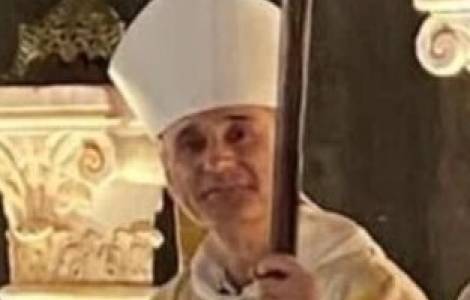
Algiers (Agenzia Fides) - The Bishop of Rome who is about to visit Algeria "has nothing to sell or defend." He arrives in the spirit of generosity, as a "son of St. Augustine," to encounter "a Muslim people to whom the Church mysteriously feels sent." For this reason, "in a certain sense, his visit is a 'visitation'."
To suggest what can be expected from Leo XIV's upcoming visit to Algeria, the Dominican Cardinal Jean-Paul Vesco, Archbishop of Algiers, uses the image of Mary, the Mother of Jesus, who, after the Annunciation of the Angel, "promptly" goes to visit her cousin Elizabeth, to assist her in the final months of her pregnancy. No "strategy," no calculation. Just the expectation of the surprising things that may emerge from a gratuitous encounter. In an Easter season in which the martyrs of Algeria offer a luminous witness of a "peace that is both disarmed and disarming," in a world torn apart by wars. " In a country where, thanks also to those martyrs, the Catholic Church is no longer perceived as "a remnant of colonization."
The Catholic Church of Algeria is also about to enter Holy Week. What does to celebrate Easter in North Africa while the Middle East and the entire world are torn apart by wars and multiple crises mean?
JEAN-PAUL VESCO: To celebrate Easter means celebrating a mystery of death and resurrection. We know that the cross exists, everyone bears their own crosses, no one is spared, especially—as you emphasize—in this context of multiple wars. But we are witnesses to the fact that the power of resurrection matures on the cross, and this victory of life over death is a time that we can live and share with others.
In this delirium of wars, blood, and tears that is shaking the Middle East, what light do the martyrs of Algeria shed on the present?
VESCO: The light of the Algerian martyrs is that "unarmed and disarming peace" of which Pope Leo XIV spoke. In the difficult situation the country faced in those years, all those who were killed were unarmed: nuns on their way to Mass, people in a children's library in the Casbah... I think of a beautiful text by Pierre Claverie who writes: "Well done, Messieurs, you have killed unarmed people." I also think of that text by Father Christian de Chergé, Prior of the Monastery of Tibhirine, in which he recalls his encounter with the armed men who had threatened him: "Afterward, I said to myself: these people, this man with whom I had such a tense conversation, what prayer can I offer for him? I can't ask the good Lord: 'Kill him.' But I can ask: 'Disarm him.'" Then I ask myself: Do I have the right to ask 'disarm him,' if I don't begin by asking 'disarm me and us as a community.'?" The echo of these words resonates with those of the Pope, who has deplored those who bless wars.
Cardinal Secretary of State Pietro Parolin, for his part, has deplored the fact that the "law of force" has replaced the "force of law." In the face of growing violence, the temptation is to arm oneself; the prophetic aspect of the blessed, in this context, is to demonstrate that more than ever, an unarmed heart is needed. The power of disarming peace. The martyrs and people with disabilities show us this power of unarmed peace.
In the context of the Middle East in flames, do you think all Christians in the Middle East and North Africa risk paying the price of the war in Iran?
VESCO: I'll answer starting from the reality I live in, that of Algeria. Today, in the minds of the authorities and Algerians, the Church is no longer Europe, nor France, nor a remnant of colonization. The Church and Christians are no longer associated with the Western bloc as they once were, and in this sense, I do not believe Christians in Algeria should suffer the consequences of a war between Iran and Israel. Indeed, sociologically, the faithful include a significant portion of sub-Saharan students and, in some places, migrants; there are also Algerians. There are approximately sixty priests and more than a hundred religious men and women, and those joining the Church today are mostly sub-Saharan or from the Global South. There are very few Europeans. In thirty years, the Church in Algeria has become more African—in the sense that Algeria is a country on the African continent—but also more Catholic, in the sense of a reality marked by a multiplicity of nationalities. Regarding the wars in the Middle East, there is no difference in sensibility between Christian and non-Christian Algerians. If I broaden my perspective to the Middle East, it is clear that Christians are victims alongside everyone else.
Today, oil interests are intertwined with bloodshed. What role does the millennial messianic impulse, perceived in certain justifications for war, play?
VESCO: The explanation of the war in Iran or the destabilization of the Middle East for purely oil-related reasons seems insufficient to me. If messianism exists, it is primarily in the sense that a man believes himself to be the Messiah or the "king of the world" and turns everything upside down. But that's just an opinion, and I haven't studied the topic deeply enough to delve further into the analysis. What I observe above all is the explosion of individualism, nationalism, and the "me first" law.
The bishops of Rome have never blessed wars in the Middle East. What have been the key moments of this magisterium in recent history, and how is it perceived by Muslim populations?
VESCO: What I can say is that Pope Francis was loved by the Arab populations precisely because he appeared as a Pope of the "global South" who understood the urgent needs of the various regions of the global South. He was immediately loved in the Muslim world because he spoke to their hearts, beyond doctrinal and formal disputes. Muslims felt loved by him. Perhaps it is precisely in these regions that his pontificate and his vision were best understood. Today, the Pope is no longer identified as the head of a Western Christianity, even though the Popes are still all Western, with the exception of Pope Francis.
Pope Leo XIV presents an interesting profile: he spent almost a third of his life in the United States, another in Peru, and one in Rome. He has a worldview that begins from the grassroots and the holiness of the next-door neighbor.
Precisely, what do you expect and hope from Leo XIV's visit to Algeria?
VESCO: An encounter with the Algerian people. A true encounter, that is, a gratuitous and authentic moment from which everyone can emerge somewhat transformed.
The Pope has nothing to sell or defend, and I believe it is precisely this gratuitousness that can open hearts. He comes as a "son of St. Augustine," as he himself says, to encounter the Algerian people as a whole, a Muslim people to whom the Church mysteriously feels sent... He comes to encounter a people and a Church, freely given. I like to say that, in a certain sense, his visit is a "visitation." (Agenzia Fides, 25/3/2026)



 There's no need to tilt at windmills. The Pope in Spain, Don Quixote, and the mission of the Church
 LEO XIV IN SPAIN - The Pope in Tenerife: “God’s love knows no borders”, meeting with migrants in Las Raíces and La Laguna
 Lyon: Pauline Jaricot's family donates a relic to the "House of Lorette"
 Jubilee of the Living Rosary: inauguration of the "missionary" Chair dedicated to Blessed Jaricot at the Catholic University of Lyon
 AFRICA/EGYPT - Greek Melkite Bishop Chami: Prayer and fasting for peace and to drive out the demons that fuel wars
 ASIA/PAKISTAN - Archbishop Arshad: "Churches and mosques should be centers of compassion and peace"
 LEO XIV IN AFRICA - Pope in Equatorial Guinea: “The Church’s social teaching offers guidance to all who seek peace and justice”
 LEO XIV IN AFRICA - Archbishop Nwachukwu: If Jesus finds refuge again in Africa
 The Easter of the Archbishop of Tehran: “Even though I am far from you, I know that in Christ, we are truly united”
 "Christ is risen." Bishop Lipke and the Easter Vigil of the "little flock" of Nižnyj Tagil
 Assembly of the Pontifical Mission Societies: Archbishop Nwachukwu invites us to proclaim the Resurrection of Christ to the world, following the example of the martyrs
 Amidst persecution, a story of grace. Beatification of the martyred priests Bula and Drbola on June 6
 The 2026 General Assembly of the Pontifical Mission Societies begins
 “The mission is Jesus”. Leo XIV and the first steps of his "missionary magisterium"