Information service of the Pontifical Mission Societies since 1927
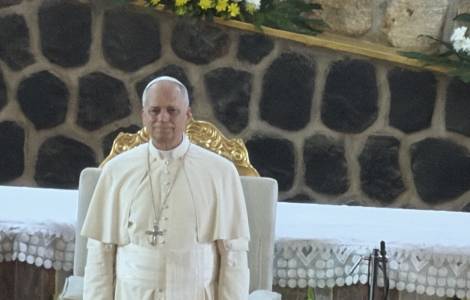
Bamenda (Fides News Agency) – It is the people who suffer the consequences of wars ordered by the powerful, and religion must not be instrumentalized to justify conflict, was the message of Pope Leo XIV during his meeting with religious leaders in Bamenda, the capital of the English-speaking region of Cameroon, on April 16, which has been ravaged by a separatist conflict since 2017.
“Dear brothers, I am here to proclaim peace. Yet I find it is you who are proclaiming peace to me, and to the entire world,” said the Holy Father as he met with the various communities of Bamenda. “The crisis impacting these regions of Cameroon has brought Christian and Muslim communities closer than ever before. Indeed, your religious leaders have come together to establish a Movement for Peace, through which they seek to mediate between the opposing sides,” he emphasized.
“I wish this would happen in so many other places of the world. Blessed are the peacemakers! But woe to those who manipulate religion and the very name of God for their own military, economic or political gain, dragging that which is sacred into darkness and filth,” Pope Leo XIV continued.
“Those who rob your land of its resources generally invest much of the profit in weapons, thus perpetuating an endless cycle of destabilization and death,” the Pontiff denounced. “It is a world turned upside down, an exploitation of God’s creation that must be denounced and rejected by every honest conscience. We must make a decisive change of course — a true conversion — that will lead us in the opposite direction, onto a sustainable path rich in human fraternity. The world is being ravaged by a handful of tyrants, yet it is held together by a multitude of supportive brothers and sisters!”
This solidarity was evident in the speeches by Fonki Samuel Forba, Emeritus Moderator of the Presbyterian Church in Cameroon, and Imam Mohamad Abubakar of the Central Mosque of Buea. The former stated that “one of the positive consequences of this crisis that has shaken our regions of Cameroon is that it has brought Christian churches and the Muslim faith closer together than ever before. “Persecution and suffering know neither faith nor race, nor language nor colour,” he emphasized. “The person who suffers needs comfort, and the human being at war needs peace, whatever their faith.”
As the Holy Father recalled, the region’s religious leaders have come together to seek a solution to the conflict. “Because of the shared suffering we have experienced, religious leaders from the English-speaking community have united and founded a peace movement through which we have sought to mediate peace and dialogue between the government of Cameroon and the separatist fighters,” the Moderator explained. “Under the leadership of the Archbishop of Bamenda, Monsignor Andrew Nkea, we visited and spoke with many leaders of the separatist movements both within the country and abroad, trying to initiate a dialogue with local separatist fighters on the ground, to convince them that peace is better than war and that war can never truly resolve any conflict.”
Imam Abubakar, after recalling that Muslims too have been killed and suffered material losses as a result of the war, thanked God “because this crisis has not degenerated into a religious war and we continue to try to love one another despite our different religions”. The Supreme Traditional Chief of Mankon, Fon Fru Asaah Angwafor IV, recalled the role of traditional leaders in welcoming the first missionaries and thanked the Catholic Church “for the great work of evangelization carried out in past years and continues today, as well as for the social services the Church provides to our people”.
In his welcoming address, the Archbishop of Bamenda, Andrew Nkea, recalled the suffering of the population caused by the conflict: “For almost four years, our children were not allowed to go to school. Children used as pawns in political struggles. Numerous priests, religious and even bishops in this province have been persecuted, beaten, kidnapped or even killed in this conflict, and yet the Church continues to bring the Gospel message as a light of hope amidst a traumatized people. This crisis has left many women widowed, many children orphaned and many people homeless”. (L.M.) (Fides News Agency, 16/4/2026)