
Information service of the Pontifical Mission Societies since 1927
© UNICEFSaid Fadhaye
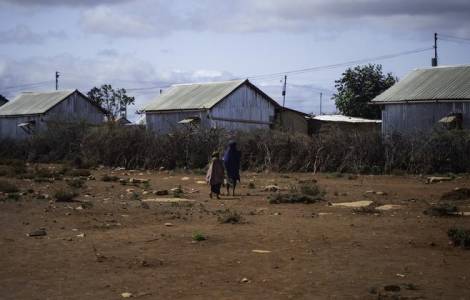
Mogadishu (Agenzia Fides) – The United Nations has issued a new warning regarding the humanitarian crisis in Somalia. According to the latest statistics from the UN's Integrated Food Security Phase Classification (IPC), which tracks this phenomenon globally, the number of people suffering from acute food insecurity could reach 6.5 million in the first three months of 2026. This includes 1.8 million children under the age of five, nearly half a million of whom are suffering from acute malnutrition. This new warning is based on the drought that struck the country in the second half of 2025, interrupting a two-year rainy season that had partially reduced the problem of famine. In fact, a total of 3.4 million people were affected by acute food insecurity in the first quarter of 2025. Those most affected are herders, poor farmers, and internally displaced persons. The problem is exacerbated by the country's internal crises, which are plagued by jihadist terrorism and political instability. The central and southern regions—areas where livelihoods depend on agriculture and livestock farming—are the hardest hit, while the north is less affected. Rising prices for imported food and cuts in international aid, which reached only 17% of those in need in January, are also contributing to the food shortage. The situation could worsen in the coming months, as only 9% of those in need have received assistance. The Integrated Food Security Phase Classification (IPC) is a United Nations tool for measuring food insecurity. It is divided into five levels: no food insecurity, severe food insecurity, acute food insecurity, emergency, and famine. According to available data, in Somalia—with an estimated population of 19 million—a third are currently in phase 3, while four million are already in phase 4 (emergency). The drought may ease somewhat by June. Other factors, such as political and social instability, could, however, keep food insecurity at the levels seen in the first months of the year. Given the many serious problems plaguing the country—including threats to its integrity in light of the situation in Somaliland—the government met in Mogadishu in recent weeks to discuss ways to combat food insecurity. The issue was discussed in a series of meetings attended by representatives from the Ministry of Education and Culture, the Prime Minister's Office, and the Disaster Management Agency (SODMA).
The meetings did not produce any concrete solutions, and the proposed measures appear insufficient to address the crisis. Meanwhile, the Director of the Disaster Management Agency, Mahmoud Moallim Abdulle, appealed to the people of Somalia and members of the diaspora to provide financial support for efforts to combat the drought. (CG) (Agenzia Fides, 3/3/2026)



 AFRICA/SUDAN - In Darfur, siege and speculation force the population to eat animal feed
 AFRICA - Catholic Migration Commission (ICMC): 34 million people threatened with famine
 ASIA/INDONESIA - Missionary October and the fight against malnutrition
 AFRICA/CAPE VERDE - Cape Verdeans begin the journey to celebrate the first 500 years of the Gospel on the Island of Santiago
 AFRICA/SOMALIA - Bishop Bertin: "We must put discord aside and act together against the real enemies: terrorism and drought"
 AMERICA/CUBA - Caritas continues distributing humanitarian aid: “We cannot reach everyone, but we want to remain close to those most in need”
 Archdiocese of Bogotá brings aid and hope to Cuba: “The Cuban people need us and ask for our support”