
Information service of the Pontifical Mission Societies since 1927
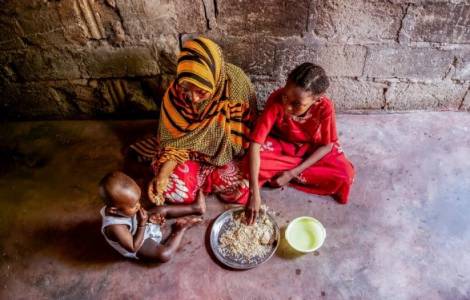
photo FAO / Gavin Gosbert and Jerry Mushala
by Cosimo Graziani
Bandar Abbas (Fides News Agency) – In times of crisis, the most vulnerable members of the population are always the first to feel the impact.
According to a recently published United Nations analysis, the crisis in the Middle East, and in particular the blockade of the Strait of Hormuz, could leave more than 11 million women worldwide facing acute food insecurity by the end of this year.
The UN identifies two main reasons for this risk. The first is the disruption of fertilizer supplies from the Persian Gulf, which could have serious consequences for the agricultural sector, where women account for 40% of the global workforce. The second is linked to gender inequality. In the countries examined, women often take on the role of “caregivers” and bear the greater share of family responsibilities. As a result, they may go without food themselves so that older people and children can eat. This is one of the hidden consequences of these crises, but it is no less significant for being less visible.
Africa is among the continents that could be hardest hit by this deterioration, particularly in areas already affected by conflict and famine, such as Sudan and South Sudan. Other countries facing some of the greatest risks are Pakistan, Afghanistan and Yemen. The analysis covers a total of 28 countries, highlighting the global scale of the emergency. Women account for 53% of those who could be affected by acute malnutrition.
South Sudan is expected to face the most severe impact, with the number of women potentially experiencing acute food insecurity reaching 852,000, or approximately 14% of the country’s population. A substantial proportion of women in the country work in agriculture. Fertilizer shortages create a vicious cycle: it undermines agricultural production, reduces incomes and limits people’s ability to access food, which in turn becomes scarcer as production declines.
The report identifies Somalia as another African country caught in this vicious cycle. The country is already grappling with chronic food shortages, compounded by security and political instability. The situation in Egypt is less severe, where just 1.5% of women could be affected by the worsening food insecurity.
The United Nations recommends a combination of measures to address food insecurity among women. These include financial assistance to compensate for lost income and the lack of investment in their livelihoods, as well as agricultural support to boost production and ensure alternative access to fertilizers. A further priority is to address the effects of food insecurity that stem from gender inequalities.
This last point, the United Nations stresses, is particularly important for understanding how to respond to future food crises and contain their impact.
(Fides News Agency, 20/10/2026)



 ASIA/UNITED ARAB EMIRATES - Abu Dhabi celebrates the 800th anniversary of the death of Saint Francis. Bishop Martinelli: He became a man of peace from the horrors of war he experienced
 Egypt, Sudan, Eritrea and Somalia meet to discuss tensions and unresolved issues in the Horn of Africa
 ASIA/INDIA - Rice production increases: "The problem of pesticides persists"
 AFRICA/SUDAN - Arms traffickers thrive while the population is in despair
 AFRICA/SOMALIA - Food insecurity rises amid drought alarm and the specter of famine
 AFRICA/SUDAN - In Darfur, siege and speculation force the population to eat animal feed
 ASIA/CHINA - Chinese Catholic communities express their gratitude to women on their feast day
 A hidden tragedy: worldwide childbirth deaths are concentrated in war zones
 Hope can rise again amid the rubble: The mission of Catholic Schools in the peripheries of Latin America
 AFRICA/SOUTH AFRICA - Catholic bishops denounce the increase in violence against migrants
 The ambivalent effects of the war in Iran on Latin American countries