
Information service of the Pontifical Mission Societies since 1927
Caritas Pakistan
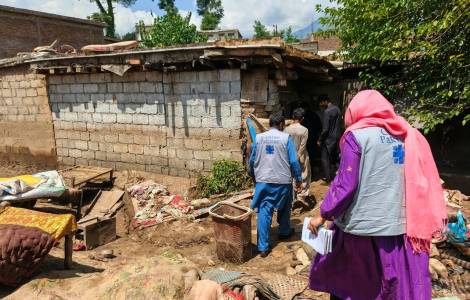
Lahore (Agenzia Fides) – "It can be said that the entire country is flooded. No province has been spared by the heavy rains and flooding. There are approximately four million displaced people, and the need for assistance is immense. In addition, there is severe damage to the economy of families and the country: for example, the floods have devastated the province of Punjab, the agricultural heart of Pakistan, destroying over 60% of the rice, sugarcane, and cotton crops. In the last 15 days, the situation has worsened, bringing the country to its knees," Amjad Gulzar, a Catholic and Executive Director of Caritas Pakistan, told Fides. Meanwhile, the Catholic Church's relief agency has provided human and material resources to assist displaced people and those in need.
"The human cost of the disaster is enormous. Over 900 people have lost their lives, thousands are in emergency shelters, and many others are homeless and in urgent need of assistance. Elderly and sick people are in danger and risk their lives. We see great suffering every day. There are families who have been living in water for 15 days now. A food security crisis is looming. And there is a great risk of disease and epidemics, as the situation has worsened since the end of June," reports the Caritas executive director.
"Our priority at Caritas is to save lives," he emphasizes. "We are distributing ready-to-eat meals and drinking water to people in the flooded areas. In the refugee camps, especially in Punjab province, we are distributing food to cook, tents, and mosquito nets." "People are desperate, and Caritas volunteers convey a single message to them without discrimination: We care about you, you are important to us. This gives them not only material but also psychological and moral support," he continues.
In addition to the human damage, there are high material and economic costs, as "production for the next season is affected, severely impacting the already fragile economy: the damage to buildings and infrastructure and the destruction of agriculture are a severe blow."
Meanwhile, the Ravi Riverfront Urban Development Project, launched by the Pakistani government in August 2020 to address the city of Lahore's numerous problems, including pollution, sanitation, water supply, and housing shortages, is at the center of a public debate. According to analysts, the government has ignored negative comments calling the project "ecologically unsustainable," claiming that building dams on the river and replacing farmland with residential areas would raise water levels and cause flooding. Today, most of the area designated for the project is flooded, as are parts of the city of Lahore itself.
The public debate also revolves around the urgency of taking preventive measures in the future to protect vulnerable groups and the most vulnerable areas. Without effective environmental protection measures that could mitigate the effects of climate change, Pakistan's most vulnerable communities will continue to face the risk of displacement and loss of their property, it is stated. (PA) (Agenzia Fides, 11/9/2025)



 ASIA/SRI LANKA - The country is on the road to recovery after Cyclone Ditwah, the Church is committed "to instilling new hope"
 ASIA/SRI LANKA - After Typhoon Ditwah, "we have to start from scratch," says the director of the Pontifical Mission Societies
 ASIA/HOLY LAND - Appeal from 53 humanitarian Organizations: "False narratives" to sabotage those saving lives in Palestine
 ASIA/SRI LANKA - State of emergency due to Cyclone Ditwah: Catholic churches open to displaced people and committed to providing aid