Information service of the Pontifical Mission Societies since 1927
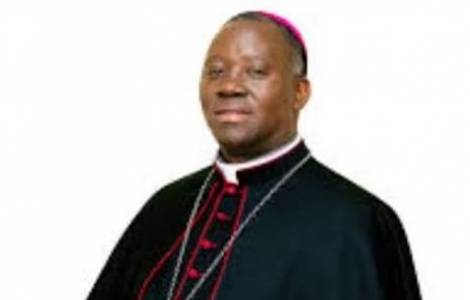
Rome (Fides News Agency) – “Reconciliation is an ongoing process,” says Bishop Papias Musengamana of Byumba, who is responsible for the apostolate within the Episcopal Commission for the Laity, in an interview with Fides News Agency on the sidelines of the International Forum of Catholic Action (IFCA), held in Rome from 15 to 18 October.
In the interview, Bishop Musengamana explains that, 32 years after the genocide against the Tutsi, the Church is accompanying the return to society of people who are nearing the end of their prison sentences. Young people, families and education are also key priorities in the Church’s pastoral work.
The Church in Rwanda has celebrated 125 years of evangelization. What has this anniversary meant for you?
It was an opportunity to look back on the journey we have made since the arrival of the first missionaries in 1900 and to return to the roots of our faith. The jubilee of the Church in Rwanda was celebrated at every level: parish, diocesan and national. At the end of the celebrations, the Rwandan Episcopal Conference drew up a program for the next 25 years, placing particular emphasis on family ministry, young people, education and, above all, community and national reconciliation.
In this regard, are the wounds left by the events of 1994 still open?
The genocide against the Tutsi left deep scars on the country, and there is still a long way to go before full reconciliation can be achieved.
In my view, reconciliation is an ongoing process. Each of us is called every day to reconcile with God, with ourselves and with our brothers and sisters. For a country like ours, which has experienced such tragic events, this journey is even more demanding.
Thirty-two years after the genocide—a relatively short period of time—we can see that, thanks be to God, important steps have been taken, although much remains to be done.
Could you give us some concrete examples of reconciliation?
There are families that have reconciled, and people responsible for crimes who have restored relationships with their victims. In addition, several people who are nearing the end of their sentences for crimes committed in 1994 will soon be released from prison.
As a Church, we pay close attention to these individuals. We seek to ensure that those preparing to leave prison are ready to reintegrate into society, and that their families and neighbors are also prepared to welcome them.
This is not an easy task. After spending decades in prison, these individuals will find themselves in a country that has changed profoundly. They will also have to face the difficulties of rebuilding family relationships and reintegrating into society. That is why we must work both with those preparing for release and with the communities that will welcome them.
Young people also make up the majority of Rwanda’s population. How does the Church intend to accompany them as they grow and mature?
Young people account for more than 70 per cent of Rwanda’s population. Education and the younger generations are therefore central to our pastoral ministry, as these two areas are closely linked. Young people represent the future and hope of the Church. Their formation is consequently a top priority in our pastoral program, alongside the promotion of family life.
Is there, therefore, an educational challenge to be addressed?
We must acknowledge the efforts made by the authorities, who have invested in education for all. However, much remains to be done, particularly to ensure that every child has access to schooling. Classrooms are often overcrowded, and the quality of education needs to improve.
As a Church, we want to contribute in this area, where we are already deeply involved. The Church runs numerous schools throughout the country, from nursery and primary schools to secondary schools. We want to continue providing quality education grounded in Christian values.
We are also aware of the many challenges facing young people, from the sometimes negative influence of social media to difficulties within families, as well as the spread of alcohol and drug use.
Is drug use also becoming more widespread in Rwanda?
Yes. First of all, alcohol abuse is widespread, and many young people experience alcohol-related problems. Drug use is also an issue in our country. After all, the world has become a global village, and some challenges affect us all.
Young people who are not in school or are unemployed are often more vulnerable to developing alcohol and drugs addictions.
Smartphones and social media can also cause problems if young people are not taught how to use them properly and responsibly. They need to learn to make responsible use of these tools without becoming enslaved to them.
As a Church, we have launched educational initiatives in this area. The commission I chair, for example, has developed programs to teach young people how to use these tools appropriately. We carry out this work through Catholic Action groups, parishes and schools.
(L.M.) (Fides News Agency, 21/10/2026)