
Information service of the Pontifical Mission Societies since 1927
Wikipedia
by Cosimo Graziani
Khartoum (Fides News Agency) – Even in wartime, the laws of the market often prevail over geopolitical alignments and ideological affinities. The arms flows in the war that has ravaged Sudan since 2023 confirm this.
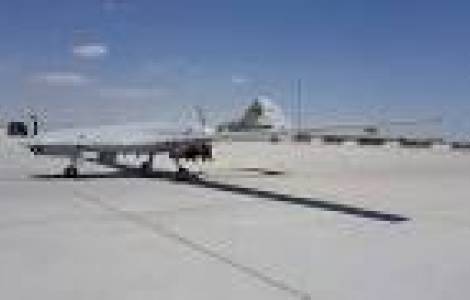
The Sudanese newspaper Ayin, with the help of analysts specializing in open-source intelligence (OSINT), has provided a general yet clear overview of the arms supplies reaching the Sudanese Armed Forces (SAF) and the Rapid Support Forces (RSF). The situation is very clear: supplies for both sides come from entities based in just a few countries, with complex networks and triangular arrangements that often end up providing weapons for both warring parties According to Ayin, Sudanese government defence companies reportedly signed a contract with the Turkish company Baykar in November 2023 for the supply of drones. The equipment supplied by the company reportedly included the well-known Bayraktar TB2. The total value of the contract is said to have been approximately €111 million. Six TB2 drones, three ground control stations and as many as 600 missile warheads were reportedly delivered. Bayraktar Akinci drones were also supplied. From a tactical standpoint, these differ from the TB2 because they are capable of flying at high altitudes, whereas the TB2 operates at medium altitude.
Other suppliers to the SAF are based in Iran. In this case, two Iranian-made models are reportedly involved: the Mohajer-6 and the Zajil-3. The difference highlighted by Ayin concerns the supply routes. The former reportedly reach Port Sudan by sea, while the latter are supplied through Sudan’s military-industrial complex, indicating a certain degree of development of the country’s domestic military industry.
The third country in which SAF suppliers operate is Pakistan. Here too, the supplies reportedly reach Port Sudan. In addition to drones, equipment supplied from Pakistan also includes ammunition jointly produced by Turkey’s Baykar and the Islamabad-based National Aerospace Science and Technology Park.
The SAF and RSF supply chains have one paradoxical feature in common: both use Chinese- and Serbian-made civilian technology that is converted into military technology, Ayin reports. The equipment arrives in Sudan, where it is modified. Drones produced by manufacturers based in China, including the FeiHong FH-95 and CH-95C models, are also reportedly reaching the RSF.
The Sudanese outlet highlights another important element: supplies to the RSF are channelled through a network whose key hubs are located in the United Arab Emirates. Through this network, the RSF also receives the same types of Turkish-made drones supplied to the SAF.
The supply flows reaching the RSF, and the points they share with those of the SAF, clearly demonstrate that business is business even in wartime, and that arms manufacturers can readily reach and supply weapons to every faction involved in a conflict.
(Fides News Agency, 4/10/2026)



 SIPRI Report 2026: The global arms market is growing, while in Africa it remains a mystery
 AFRICA/SUDAN - Arms traffickers thrive while the population is in despair