Information service of the Pontifical Mission Societies since 1927
CBCI
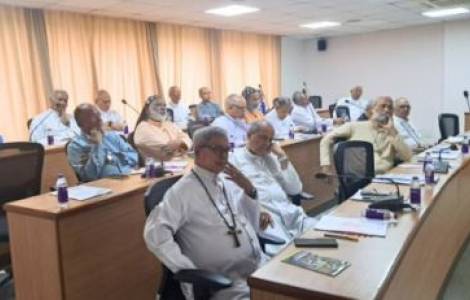
New Delhi (Fides News Agency) - Establishing an ethical framework for artificial intelligence and disarming it, placing it at the service of human dignity, and the protection of the poor and vulnerable: these are some of the key points of the encyclical "Magnifica Humanitas," which the Indian bishops welcomed, as they announced in a statement following the publication of Pope Leo XIV's first encyclical.
The Catholic Bishops' Conference of India (CBCI) described the text as "a valuable contribution to the Social Doctrine of the Church, in continuity with Rerum Novarum" and as "a guide for dealing with the challenges of AI," which are manifold in the Indian context: unemployment, inequality, surveillance, and the concentration of power. The perspective from which to approach these problems, the CBCI emphasized—as is clearly evident in the encyclical—is the reaffirmation of the “centrality of the human person, created in the image of God” and the endeavor to ensure that technological development is “guided by ethical principles grounded in human dignity, justice, and the common good.”
The Indian Church—a community of some 20 million faithful—intends to use the encyclical “Magnifica Humanitas” to educate and raise awareness on this topic in parishes and educational institutions. Given the rapid digitalization and increasing spread of artificial intelligence in India, which are fundamentally transforming education, work, and society, the CBCI recommends the encyclical as a valuable guide for pastors, educators, policymakers, and the faithful. The bishops are committed to deepening and disseminating the encyclical, particularly in formation programs, Catholic educational institutions, and social apostolate.
Cardinal Anthony Poola, President of the CBCI, emphasizes that the document offers “a clear moral compass in a time of rapid technological change” and underscores the need to protect the most vulnerable, especially the poor, young people, and marginalized communities, from the potentially negative effects of uncontrolled artificial intelligence. “The CBCI encourages all Catholics and people of good will to read the encyclical in a spirit of prayer and to foster a culture in which technology is at the service of the integral development of every human being.”
One of the Church’s particular concerns is the impact of AI on Dalits: On the one hand, there is a risk of exacerbating historical discrimination; on the other hand, AI, if used according to ethical and developmental criteria, offers potential for inclusion.
In India, one of the most active countries in AI development, also through government investment, “Magnifica Humanitas” is being published at a time when the ethics and impact of AI on society, the education sector, and social justice, especially for the poorest, are being intensely debated.
In this context, the Pope's text also attracted interest in the Indian media: The Hindu newspaper, for example, highlighted the Pope's call to "disarm" AI, contextualizing the encyclical as a "global ethical manifesto" that also calls on India to implement appropriate regulatory measures.
Among the most interesting aspects in the Indian context, examined in analyses by newspapers such as the "Economic Times" and the "Times of India," is the issue of employment, given the potentially high risks to jobs due to the country's significant IT sector. In general, the Indian media welcomed the call for the necessary regulation of AI processes and the insistence on the primacy of the individual over profit and innovation. (PA) (Fides News Agency, 27/5/2026)