Information service of the Pontifical Mission Societies since 1927
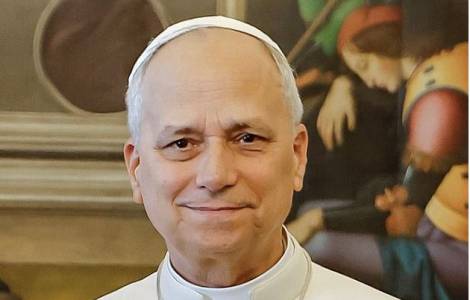
Luanda (Fides News Agency) – "We must always be vigilant regarding those forms of traditional religiosity that certainly belong to the roots of your culture, but at the same time risk confusing and mixing magical and superstitious elements that do not aid your spiritual journey," said Pope Leo XIV in his homily at Mass on Sunday, April 19, in Kilamba, Angola (see Fides, 19/4/2026). "Remain faithful to what the Church teaches, trust your pastors, and keep your gaze fixed on Jesus, who reveals himself in the word and in the Eucharist," urged the Holy Father in a country, Angola, where there are forms of religious syncretism connected with "magical" elements practiced by Catholics as well.
Religious syncretism has existed in Angola since the early evangelization of the Kingdom of Kongo (which included northern Angola and parts of what is now the Democratic Republic of Congo) between the late 15th and early 16th centuries. At the beginning of the 18th century, Beatriz Kimpa Vita founded Antonianism, a movement that was both religious and political. Religiously, this was a syncretistic fusion of Christianity and African religious practices. Vita presented herself as the reincarnation of Saint Anthony of Padua and claimed that Jesus was Black and born in Congo. She sought to challenge the Eurocentric portrayal of Christianity and promote a more inclusive interpretation rooted in African culture. In doing so, she rejected some Catholic symbols (such as the cross, which was seen as an instrument of death) and rituals (such as baptism or confession in some cases), while integrating local rituals as well as elements of healing and prophecy beliefs. From a political perspective, Kimpa Vita aimed to unite the politically divided and fragmented Kingdom of Kongo, which had lost its former unity. Some characteristics of Antonianism can be found in both syncretic traditions of the Americas, such as Brazilian Candomblé and Cuban Palo, and in the Kimbanguist Church, which originated in the Democratic Republic of Congo but is also widespread in some parts of Angola (see Fides, 28/1/2023).
The Tokoist Church, founded in the 1940s by Simão Gonçalves Toko (1918–1984), a former student of the Baptist Missionary Society, was of Angolan origin. It established itself in the late colonial period and the early years of the post-colonial era as a movement of resistance and spiritual emancipation. Furthermore, forms of superstition related to alleged "magical" practices persist, with significant social consequences. Particularly in some areas of Angola, children are accused of witchcraft. These are often exceptionally gifted children, leading many families to believe they are involved in witchcraft. (L.M.) (Fides News Agency, 20/4/2026)