Information service of the Pontifical Mission Societies since 1927
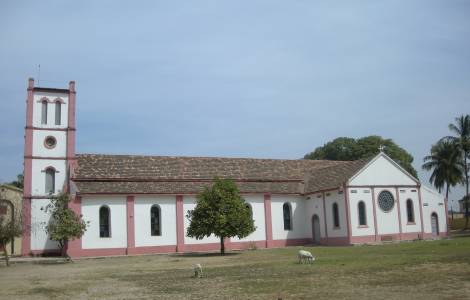
Dakar (Fides News Agency) – In Casamance, there is a strong desire for peace, but there is still no clear path towards achieving lasting peace. This is the view expressed by Bishop Jean-Baptiste Valter Manga of Ziguinchor in his pastoral letter entitled Deus Gratiam Facit, published on the second anniversary of his episcopal ordination.
During his visits to the region, Bishop Manga has seen a genuine desire for peace among the people. However, he notes, “there is still no clear indication of the way forward towards achieving lasting peace”.
The Bishop of Ziguinchor recalled that, at his episcopal ordination on 23 November 2024, he had already stressed that the conflict could not be resolved through the use of arms, but through reconciliation, since those fighting one another are brothers.
Casamance, a region in southern Senegal separated from the rest of the country by Gambia, mainly comprises the administrative regions of Ziguinchor, Sédhiou and Kolda. The Movement of Democratic Forces of Casamance (MFDC) has been active in the region since 1947. Although it later became part of national political parties, the people of Casamance have maintained their distinct identity.
The conflict officially broke out on 26 December 1982, when a peaceful MFDC demonstration in Ziguinchor was violently suppressed after demonstrators replaced the Senegalese flag with a white one. Under the political leadership of Father Augustin Diamacoune Senghor, the MFDC subsequently established its armed wing, Atika (“warrior” in the Diola language). From 1990 onwards, the conflict escalated into open military confrontation, marked by attacks, ambushes and landmines.
For several years, Casamance has enjoyed relative peace and a gradual return to normal life, helped by the revival of activities such as tourism and agriculture. However, the consequences of the conflict remain: landmines, abandoned farmland, trauma, underdevelopment and youth emigration continue to pose serious challenges for local communities.
This is why, in his pastoral letter, Bishop Manga stresses the need to make better use of the region's resources. Casamance, he points out, has considerable natural and fishing resources, but local communities are unable to benefit fully from them, partly because lasting peace has yet to be achieved.
“We have land that is no longer cultivated because people are afraid or because it is contaminated. I believe development is a key issue that needs to be addressed,” he said.
Bishop Manga says he is committed to working alongside the State and non-governmental organizations to build peace and promote development.
“I am a Bishop, a Christian and a Catholic. But peace is not just a concern for my religion; it concerns all the people of Casamance and all Senegalese, regardless of their beliefs or religion. That is why I wanted to speak about peace while also calling on everyone to work towards reconciliation.”
Bishop Manga concludes by expressing his hope that Casamance will become a place where people, especially young people, can build their future and fulfil their aspirations without being forced to leave in search of a better life elsewhere.
(L.M.) (Fides News Agency, 27/10/2026)