Information service of the Pontifical Mission Societies since 1927
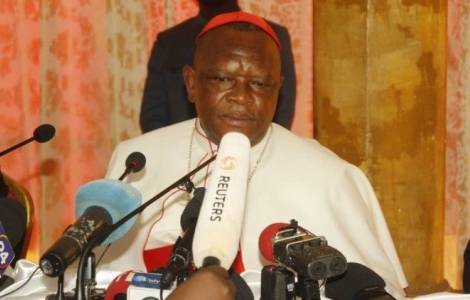
Kinshasa (Fides News Agency) – “Violence of great concern.” This is how Cardinal Fridolin Ambongo, Archbishop of Kinshasa, described the police dispersal, using tear gas, of a peaceful march held yesterday, 23 November, in Lubumbashi. The demonstration had been organized to call for a solution to the long-standing dispute concerning the Saint Paul Interdiocesan Major Seminary.
Police had surrounded the residence of Lubumbashi Archbishop Fulgence Muteba the night before, preventing him from leaving and taking part in the march (see Fides, 23/11/2026).
To prevent the demonstration from taking place, police had surrounded the residence of the Archbishop of Lubumbashi, Fulgence Muteba, the previous night, preventing him from leaving (see Fides, 23/11/2026).
In a message addressed to the clergy and faithful of the ecclesiastical province of Lubumbashi, Cardinal Ambongo stated: “These acts of violence, which occurred just one day after our Eucharistic celebration was banned in Kinshasa, are particularly worrying. They suggest that the Catholic Church is now being subjected to acts of intimidation aimed at hindering its mission and silencing its voice.”
On Sunday, 22 November, a Mass with young people from the Archdiocese of Kinshasa had been cancelled. The celebration, organized for the Solemnity of Christ the King, was due to take place at the Tata Raphaël Stadium in the capital of the Democratic Republic of the Congo (see Fides, 23/11/2026).
In response to these two serious incidents, Cardinal Ambongo stressed: “Our patience is not weakness, our commitment to peace is not fear, and our silence must never be mistaken for complicity with injustice. We cannot accept that force should replace the rule of law, or that violence should become the response to those who demand justice.”
Addressing the faithful of Lubumbashi, the Cardinal urged them to “remain united, steadfast in faith and determined to defend your rights with dignity, courage and non-violence”.
“Do not give in to fear, hatred or provocation. A procession can be dispersed, but cannot disperse the Church. Believers may be struck by tear gas, but the truth cannot be silenced. Pastors may be intimidated, but the Word of God cannot be muzzled.”
The Archbishop of Lubumbashi told the press that the Constitution requires organizers to notify the authorities of public demonstrations, but does not require them to obtain prior authorization. He confirmed that the Archdiocese had fulfilled this obligation.
He also recalled that the march had already been postponed by approximately two weeks at the request of the Governor of Haut-Katanga, who had promised to work towards a solution (see Fides, 9/11/2026).
With no progress having been made, the Bishops decided to organize the demonstration, which was subsequently dispersed by the police.
Lubumbashi Mayor Joyce Tunda Kazadi defended the ban by referring to the suspension of public demonstrations in Haut-Katanga, which had been in force since 31 August and was renewed on 9 November.
She also argued that the decision was motivated by the risk of opposition party members infiltrating the march, a possibility which, she claimed, had been reported by the security services.
(L.M.) (Fides News Agency, 24/11/2026)