Information service of the Pontifical Mission Societies since 1927
SMA
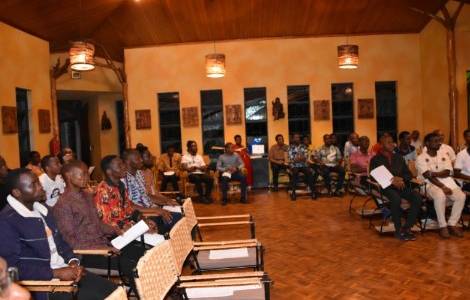
Nairobi (Fides News Agency) – How can people live in the digital world while remaining attentive to God, and be present to others? This was the main question addressed during a recent online training session for 48 seminarians of the Society of African Missions (SMA) in Nairobi, Kenya.
Entitled “From Digital Habits to Intentional Living: Media, Time and the Formation of a Future Priest,” the session explored the opportunities and challenges of digital technology in the human, spiritual, intellectual, community and pastoral formation of future missionaries.
“Before the session, an anonymous questionnaire was distributed to understand their digital habits, experiences and challenges. Forty of the 48 seminarians responded,” said Father Pierre-Paul Dossekpli, an SMA priest from Togo. “The findings revealed that digital media already plays an important role in their formation. Ninety percent reported using digital platforms for academic study and research, 87.5% for communicating with family and friends, and 60% for prayer and spiritual formation.
At the same time, 87.5% acknowledged spending more time online than initially intended, at least occasionally.”
The findings not only highlight a reality often overlooked in discussions about young people and technology, but also on the need to use it responsibly, so that it can serve their vocation without gradually taking control of their time, attention and personal relationships.
“Particular emphasis was placed on the relationship between attention and listening for a future missionary: the ability to listen attentively to God, confreres and the people entrusted to his pastoral care is essential,” Father Dossekpli continued. “Constant digital interruptions can gradually weaken this capacity for sustained attention.”
“As one reflection on the digital age reminds us, “We do not live ‘in front of’ technology, but ‘within’ digital environments that establish forms of experience.” Technologies are no longer merely tools we use; they are increasingly part of the environments in which we study, communicate, seek recognition, make decisions and understand ourselves.”
The session concluded by inviting each seminarian to identify one practical change to implement over the following seven days. A post-session evaluation, completed by 31 participants, provided encouraging feedback. Twenty-nine (29) respondents considered the formation very relevant to their lives as future SMA missionary priests.
Several seminarians expressed their intention to manage their time more carefully, reduce unnecessary smartphone use, protect study periods, and exercise greater prudence before sharing information online. One participant summarized his intended change in a simple but meaningful commitment: “Always think before I click.” The evaluation also revealed interest in further formation, particularly concerning artificial intelligence, digital identity, online evangelization and responsible communication.
The Nairobi initiative is part of a wider reflection on missionary formation in a constantly changing cultural environment. As the SMA Superior General, Father François du Penhoat, also reminded members at the 2025 General Assembly, it is necessary to explore new ways of carrying out the mission, while remaining faithful to what he described as the DNA of our missionary vocation: being attentive to people and present at their side.
Technological competance, therefore, cannot replace personal witness or the quality of relationships. “Authentic and true witness of life is stronger than any technical skill,” Father du Penhoat stressed.
Ultimately, preparing missionaries for the digital age involves more than teaching them to use technological tools. It means forming people who can live wisely and responsibly in an increasingly digital world while remaining attentive to God, present to others, and faithful to the mission entrusted to them.
(AP) (Fides News Agency, 24/11/2026)