Information service of the Pontifical Mission Societies since 1927
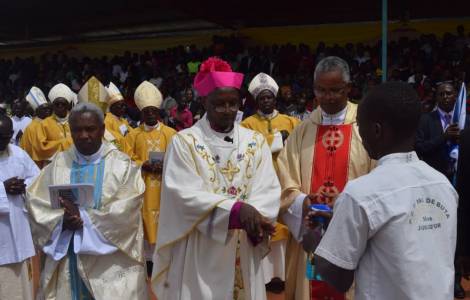
Bujumbura (Fides News Agency) – “One of our priorities as a Church is peace and reconciliation.” This was stated by Msgr. Salvator Niciteretse, Bishop of Bururi and coordinator of the International Forum of Catholic Action (FIAC) for Africa, in an interview with Fides on the sidelines of the FIAC meeting held in Rome from 15 to 18 October.
What is the Church doing in Burundi to promote peace and reconciliation?
Since 2004, the Church in Burundi has been working to foster a culture of peace and reconciliation. Our country has experienced several conflicts that have left deep wounds. We are seeking to heal the social fabric through meetings and initiatives aimed at forming consciences to respect life, human dignity and the common good.
On several occasions, we have also organized peace marches and demonstrations, involving young people in particular, many of whom are members of Catholic Action groups.
At diocesan level, we organize youth forums that attract large numbers of participants, ranging from 4,000 to 6,000. At national level, we have organized gatherings attended by several thousand young people, who have been hosted by families. This experience of hospitality and sharing also helps nurture a culture of peace and reconciliation.
The family is another area of commitment. What are the priorities of family ministry?
We are working to promote family ministry. We are asking ourselves how we can strengthen families, because without strong family units it is difficult to support the growth of the women and men of tomorrow, who will be called upon to shape Burundi’s future.
What are the main challenges facing young people in Burundi?
The main challenge is unemployment. There are not enough jobs in Burundi, and as a result, some young people seek to move to Western countries or neighboring countries such as Tanzania, Zambia and the Democratic Republic of the Congo, in the hope of finding employment.
Many young people drop out of school because they see that even those who have graduated from university struggle to find work. At that point, they ask themselves: “Why study?” Despair leads many young people to fall victim to alcoholism. This is a problem that both the Church and state institutions are seeking to address. Measures taken include a ban on the sale of high-alcohol-content beers.
Burundi is also hosting a large number of refugees from the Democratic Republic of the Congo. What is the situation, and how is the Church responding?
There are more than 80,000 Congolese refugees in Burundi, most of them from Uvira, the capital of South Kivu province in the Democratic Republic of the Congo. Until recently, my diocese was hosting more than 30,000 of them, but they have since been transferred to other parts of the country.
As a Church, we are doing everything we can to help them, working in cooperation with the International Committee of the Red Cross and UNICEF.
(L.M.) (Fides News Agency, 22/10/2026)