Information service of the Pontifical Mission Societies since 1927
Archdiocese of Lahore
by Paolo Affatato
Lahore (Fides News Agency) – In Pakistan, interreligious dialogue "is not an option, but a necessity." This conviction lies at the heart of the pastoral ministry of Archbishop Khalil Rehmat, OFM Cap, a Capuchin friar called to lead one of the country's oldest and most significant Catholic communities. Appointed Metropolitan Archbishop of Lahore by the Pope on March 10, 2026, Archbishop Rehmat received the pallium from the Pontiff on June 29 during the celebration in St. Peter's Basilica, where the liturgical insignia was conferred upon the 35 new archbishops appointed over the past year.
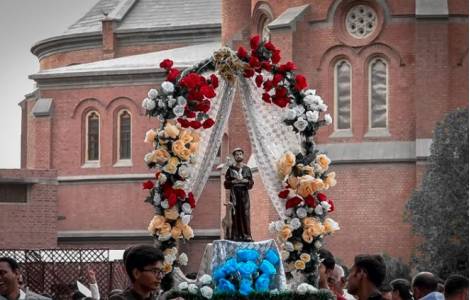
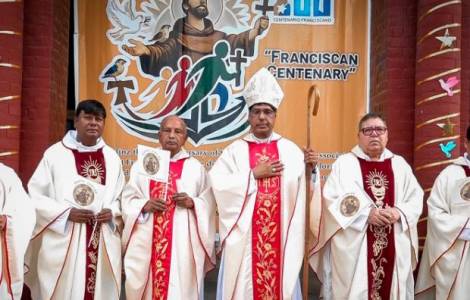
As the Church marks the eighth centenary of the death of St. Francis of Assisi (1226–2026), proclaimed by Pope Leo XIV as the "Franciscan Jubilee Year" (January 10, 2026 – January 10, 2027) — and celebrated in Pakistan with great devotion and also with interreligious gatherings — Archbishop Rehmat reflects, in an interview with Fides, on the charism of the Saint of Assisi as a compass guiding the mission of the Church in Pakistan amid everyday challenges, care for creation, evangelical witness and peacebuilding.
The Archdiocese of Lahore, known as the "mother diocese" of Punjab, is home to more than half a million Catholics in a metropolis of around 33 million inhabitants, the majority of whom are Muslim. Christianity in the region traces its roots to the Jesuit missions of the sixteenth century and, from the late nineteenth century onward, was profoundly shaped by the ministry of the Capuchin Friars Minor, to whom the diocese was entrusted in 1888. Today, the Archdiocese is led by a Pakistani Capuchin, a sign of the maturity achieved by the local Church.
According to Archbishop Rehmat, Franciscan spirituality remains remarkably relevant and constitutes a shared heritage for all the baptized. "The spirituality of St. Francis continues to inspire everyone, not only members of the Franciscan family, priests and religious sisters, but all the faithful," he says. Eight centuries ago, he notes, the Saint of Assisi had already understood the profound bond of fraternity that binds humanity to one another and to the whole of creation.
"He called on humanity to regard the universe as our 'common home' and to value every person and every creature as a brother or sister. As a simple man with a heart in harmony with God, St. Francis showed humanity the way to avoid both the crisis of human relationships—today deeply marked by war and violence—and the ecological crisis."
The Franciscan legacy is intertwined with the papal teaching on the protection of creation: "Pope Leo, and before him Pope Francis in the encyclical Laudato si', clearly emphasize that Mother Earth is our common home and that we must care for it. We are not the owners of this earth and its resources; we are its stewards. In a spirit of responsibility and sharing, we are called to safeguard life for future generations," the Archbishop states.
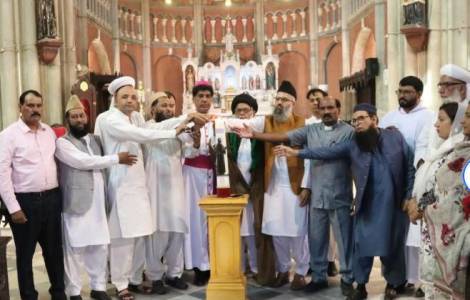
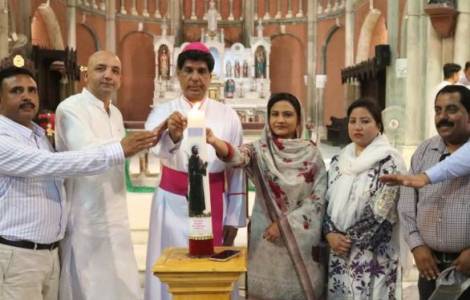
Above all, however, it is in relations among religious communities that the Franciscan witness takes on particular significance in Pakistan: "Interreligious dialogue is not an option for us. It is a necessity, it is our need," he explains, recalling the example of St. Francis, who visited and spoke with the Sultan. In a country where Christians are a small minority, "building daily relationships of trust with the Muslim majority means contributing to the coexistence of society as a whole."
"Pakistan is a beautiful country. We love its landscapes, its culture, its food and its people, and we receive many blessings from our beloved homeland. But crises and problems do exist," the friar acknowledges. For this reason, he adds, "the entire Bishops' Conference and the Franciscan communities are doing remarkable work in building social harmony, peace and fraternity."
This commitment continues thanks to the legacy of figures such as Capuchin Father Francis Nadeem, OFM Cap, a pioneer of interreligious dialogue who passed away in 2020. Today, his work is carried forward by Father Nakash Azam, the diocesan director for interreligious dialogue.
Pakistan's social context continues to present serious challenges. Christians still face social and economic discrimination, remain vulnerable to abuses of the country's blasphemy legislation, and continue to suffer forced conversions and marriages, particularly involving girls from religious minority communities. These difficulties are compounded by poverty, illiteracy, and the need to maintain high levels of security around churches and Christian neighborhoods.
Faced with these challenges, Archbishop Rehmat points to cooperation with institutions and with all people of good will as the way forward: "We acknowledge that problems exist, such as the abduction of Christian girls who are forcibly married to Muslim men, or episodes of violence against Christians. But the country's institutions, politicians, civil society organizations, Muslim religious leaders and many ordinary citizens recognize these challenges, support us and believe in justice. That is why we work closely with Muslim leaders, who are our brothers, and with government institutions. This is our homeland, this is our country. We believe that by addressing these issues together, things can gradually improve through a spirit of cooperation that serves the common good."
Despite these difficulties, what most strikes the Archbishop since his arrival in Lahore—following the first years of his episcopal ministry in the Apostolic Vicariate of Quetta—is the vitality of the Catholic community.
"The faith here is vibrant and deeply rooted. We are a vibrant community, blessed by the Lord and enriched with many gifts," he says.
Young people under the age of 30 make up around 60 percent of Pakistan's population and, according to the bishops of Pakistan, also constitute approximately 60% of the Christian community. Throughout Pakistan's dioceses, Archbishop Rehmat notes, young people are deeply involved "in the liturgy and the animation of celebrations, in Bible and prayer groups, in Caritas and volunteer activities, in interreligious dialogue initiatives, and through diocesan and national youth movements."
"The presence of children, adolescents and young families is one of the most evident signs of the vitality of the Church in Pakistan and the source of our hope for the future," he observes.
In a country where Christians are a small minority, he continues, the witness of the Church in Lahore is expressed through service, dialogue and fraternity. In the spirit of St. Francis, the Archbishop reiterates, "peace is born from the conviction that every person is our brother or sister and that our land belongs to everyone."
Inspired by this commitment to preach and live peace, the Church continues to serve society through schools, universities, healthcare facilities, vocational training programs and the humanitarian initiatives of Caritas, all of which benefit citizens regardless of their religious affiliation. "Education," the Archbishop emphasizes, "remains the principal means of breaking the cycle of poverty and marginalization."
Reflecting on his episcopal ministry, which began in the Diocese of Quetta and now continues in Lahore, Archbishop Rehmat entrusts his mission to God in the spirit of the Magnificat: "I want to thank God, as Mary does in the Magnificat, for all the good He has done for me and for the entire community. The Lord has done great things for us, and holy is His name."
He concludes: "I will devote all my efforts to serving the Archdiocese of Lahore with all my heart, in collegial communion with my brother bishops and in obedience to the Pope. I am here to care for the faith of God's people. My priority is the pastoral care of the faithful: to celebrate the sacraments with and for them, to nourish hope, to encourage charity, and to inspire my priests to work together in unity."
(Fides News Agency, 9/7/2026)