Information service of the Pontifical Mission Societies since 1927
Diocese of Islamabad-Rawalpindi
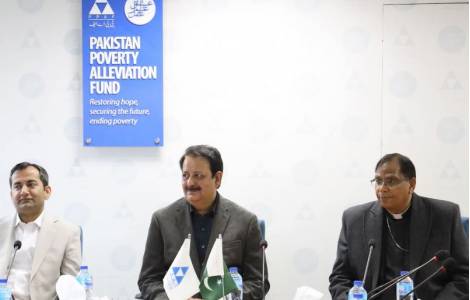
Islamabad (Fides News Agency) – The partnership between the Pakistan Poverty Alleviation Fund (PPAF) and the Catholic Diocese of Islamabad-Rawalpindi, recently established in Islamabad, aims to create a foundation for cooperation and explore avenues of collaboration to promote inclusive development, peace, dignity, and prosperity in Pakistani society, which is severely affected by poverty and socioeconomic hardship with all its consequences. The partnership was signed at a meeting of representatives from the Church and civil society, who reaffirmed their shared commitment to combating poverty and its structural causes.
Archbishop Joseph Arshad of Islamabad-Rawalpindi emphasized in this context: “Poverty is never just a matter of numbers or statistics; it concerns real people who deserve to be seen, heard, and valued.” He called on those present to look beyond institutional data and “develop a greater empathy that recognizes the human suffering in vulnerable communities.” He also addressed the issue of housing security, emphasizing that “a safe and stable roof over a family’s head is a fundamental, God-given human right.” The Archbishop spoke of a “more compassionate Pakistan, where true peace means not only the absence of conflict, but also the presence of love and active cooperation so that no one is excluded.”
According to official estimates, Pakistan’s national poverty rate stands at 28.9%. It is rising due to high inflation, increasing energy prices, and declining real incomes. However, the Social Policy and Development Center (SPDC), an independent body, estimates that around 105 million people are affected by poverty: 44.7% of the population lives below the poverty line, with the rate being higher in rural areas than in urban areas. In this context, Archbishop Arshad emphasized that religious minorities in Pakistan often bear the greatest economic burden and are overrepresented among the poorest segments of the population. According to reports from human rights groups, socioeconomic researchers, and non-governmental organizations, Pakistani Christians are disproportionately affected by poverty and exhibit marked socioeconomic vulnerability. The high poverty rate is structurally linked to workplace discrimination. In urban centers such as Peshawar and Lahore, 76 to 80% of low-wage jobs in sanitation and wastewater management are held by Christians. According to data from the Movement for National Development and Justice, the literacy rate among Christians is estimated at 19%, compared to a national average of 58%. This contributes to trapping entire generations in a vicious cycle of systemic poverty.
The Catholic Church in Pakistan is focusing on structural interventions to address the root causes of poverty, particularly in two areas: education and vocational training, which are considered key to social improvement, and economic development through support for small businesses. Education is considered the most effective way to break the cycle of poverty, especially among Christian minorities.
The Church operates schools at all levels and universities, which are open to everyone. It also supports vocational training programs in fields such as sewing, crafts, IT, and mechanics, primarily aimed at young people and young women. This includes supporting micro-enterprises by promoting small businesses and providing access to microcredit. Particular emphasis is placed on programs for the economic empowerment of women, who are seen as essential for the development of families and local communities. (PA) (Fides News Agency, 10/6/2026)