
Information service of the Pontifical Mission Societies since 1927
diocesispalencia.org
by Marie-Lucile Kubacki
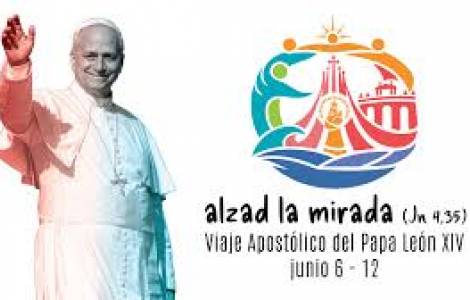
Madrid (Fides News Agency) - From June 6 to 12, 2026, Pope Leo XIV will visit Spain as part of his fourth apostolic journey outside Italy. During this trip, he will visit Madrid and Barcelona, where he will celebrate Mass at the Sagrada Família to commemorate the 100th anniversary of the death of the renowned architect Antoni Gaudí (1852–1926). He will then travel to the Canary Islands, an archipelago affected by the migration crisis.
From an ecclesial and missionary perspective, the situation in Spain is particularly interesting. Historically shaped by Christianity, the country is currently undergoing a process of secularization, yet the ecclesial community continues to exhibit a palpable sense of social cohesion.
A survey published by CIS (Survey on Social Trends V, Study No. 3535, December 2025) documents that 15.2% of respondents identify as practicing Catholics. Of all respondents, 11.4% stated that they attend Mass “every Sunday and on holy days of obligation,” while 4.7% attend Mass “several times a week.”
In light of this situation, the Spanish Episcopal Conference has been conducting an in-depth reflection of the realities of the country for several years.
A few weeks before the Pope’s arrival, the Episcopal Conference published a comprehensive and insightful document entitled "Set out on the Journey" (a quote from the Gospel of Luke 10:3), which proposes pastoral guidelines for the next four years.
While Pope Leo XIV, in his recent address to the participants of the General Assembly of the Pontifical Mission Societies, reminded the “faithful of the most ancient Churches” of the importance of their participation “in the missionary spirit of the whole Church” (see Fides, 1/6/2026), the text from the Spanish bishops offers a clear and dynamic analysis. “In Spain, the centuries-old era of saying, ‘I am Catholic because I was born in Spain,’ is definitively a thing of the past,” the document states.
“The difficulties we encounter in evangelization, coupled with the aging and declining membership of the Christian community—married couples, consecrated persons, pastors, and lay people committed to the Church’s mission—lead to a certain discouragement within the Church, which is further exacerbated by the workload and challenges of evangelization, especially among the ordained clergy,” the document continues. “Consecrated persons in Spain are experiencing an extraordinary restructuring of their provinces and their apostolic presence. The ongoing restructuring of parishes into ‘pastoral units’—regardless of their name—along with the developments just described, gives us the feeling that we are focusing on ‘managing resource scarcity,’ which hinders the path to the ‘pastoral conversion’ that the novelty of this epochal change demands.”
The temptation of a “double life” and the expectations to consider
The Spanish Episcopal Conference prompts reflection by recalling the episode in the Upper Room, where the disciples were initially trapped in fear. “Some believe it is better to seek refuge in the ‘Upper Room’ until the storm has passed,” it states in this context. The bishops warn against the temptation to divide mission and the life of the Church into what happens in the ‘temple,’ in the ecclesial context, and what happens outside, in the rest of the day. “The difficulties deeply rooted in our culture push us toward a kind of double life, in which we proclaim the message of the Gospel while simultaneously adopting worldly ways of life, tools, and means,” they continue. “Ultimately, we reduce life in the sign of the Gospel to the temple, while outside—in working relationships, in relationships with others and neighbors, as parents in schools, or as professionals—we accept the world’s rules, dominated by money and power, which breed indifference and passivity toward evangelization within the context of the prevailing mentality.” This “double life” is the “social alienation” to which Francis refers in his encyclical Dilexit nos (2024). According to the Spanish Bishops' Conference, this climate gives rise to "ideological reductions of faith or nostalgia for bygone eras," which "attribute all the Church's ills to the conciliar reforms and their reception."
Among the symptoms of contemporary worldliness, the Spanish bishops cite a culture of "empowerment" in the anthropological, economic, and political spheres, which "produces a mentality that contradicts the Christian understanding of humanity." Another symptom is consumerism. "The current cultural, economic, and political system is structured like a supermarket: pleasure, understood as the satisfaction of a desire, and power and money as the means to achieve it,” it states. In a context marked by the rise of individualism and the weakening of the traditional understanding of family and community, the Bishops’ Conference observes a growing unease in the face of the unknown. The “anthropological reduction of man to a mere individual” generates deep dissatisfaction and impoverishes “reason, feeling, and will.” This dissatisfaction is often compensated for by the pursuit of “power” or “additional substitute gratifications,” without ever overcoming the persistent unease. And yet, this tension reveals a deeper longing: the rediscovery that “life is a gift, not power.” Behind the glorification of the individual, therefore, lies a “longing for the person,” behind the pursuit of power, a longing for “love,” and behind the promises of a “fulfilled life plan” offered by consumer society, a longing for “holiness.” For the Spanish Bishops' Conference, these are the expectations the Church must meet in order to be active in missionary work.
The rriumph of a “Do-It-Yourself” religion
Another key finding is that in secularized Spanish society, “the Church is confronted less with atheism than with a longing for God, which manifests itself in many different ways.” According to a study by the “Fundación SM” entitled “Jóvenes españoles 2026” (Spanish Young People 2026), which was reported on by several Spanish Catholic media outlets, the percentage of young people who identify as Catholic increased from 31.6% to 45% between 2020 and 2025, but the content of this faith is often syncretistic: Among practicing Catholics, 60.7% believe in karma, 48.5% in reincarnation, and 44.1% in magic. This gives rise to "tailor-made" spirituality that combines elements of Catholic tradition with fragments of "neo-esoteric spirituality." While numbers should not be overemphasized, these data illustrate the complexity of the situation, which cannot be simply explained by the dialectic of decline and renewal. How, then, can one respond to this longing for God, knowing that it often goes hand in hand with a more individualistic and detached attitude toward institutions? The mission for those whom sociologists of religion sometimes describe as "spiritual but not religious" or "non-denominational" is thus one of the most pressing tasks of our time. These elements are also found in France, where the Pope will travel from September 25 to 28. In both countries, the recognition of secularization and the decline of Catholic practice demands, more than ever, a stronger focus on the coherence and vitality of witness.
In Spain, the Church is calling for this paradigm shift to be carried out with the help of the discernment outlined by Pope Francis in his 2023 address to the Roman Curia: “Sixty years after the Council, the distinction between ‘progressives’ and ‘conservatives’ is still being debated, but that is not the difference: in fact, the central difference is that between ‘those in love’ and ‘those who are accustomed to it.’ This is the difference. Only those who love can move forward.”
Numerous apostolic initiatives and experiments have been implemented in recent years “in the areas of initial evangelization, adult catechumenate, renewal of sacramental preparation, new marriage preparation programs, popular spirituality, Eucharistic adoration, and aid for the poorest,” the Bishops’ Conference notes, also highlighting the contribution of Catholic migrants to the revitalization and renewal of parishes. Ultimately, it is less about inventing new recipes than about rediscovering, in every era and in every place, the source of the living water of the Gospel and the simple, timeless gestures of the Beatitudes. (Fides News Agency, 5/6/2026)



 VATICAN - Cardinal Luis Antonio Tagle is the new Dean of the Sacred College of Cardinals
 CHINA/VATICAN - From “exceptional event” to a common practice: Chinese bishops take part in Holy See initiatives
 POPE IN FRANCE/XI - Leo XIV in Metz: Europe seeks peace in the "Lantern of the Good Lord"
 THE POPE IN FRANCE/X - In Lourdes, where the vulnerable bring light
 Missions in upheaval: World Mission Sunday during the years of war
 VATICAN - Sister Mary Teresa Barron appointed adjunct secretary of the Dicastery for Evangelization and president of the Pontifical Mission Societies
 POPE IN FRANCE/II - Behind the figures: the fragmented and “indecipherable” expectations that will greet Leo XIV
 Cardinal Aveline, Archbishop de Moulins-Beaufort, and missionary renewal in France
 EUROPE/CZECH REPUBLIC - The “Night of the Churches”, an opportunity for encounters in the time of agnosticism
 AFRICA/EGYPT - Christians and Muslims from Minya recommend removing religious affiliation from identity documents