
Information service of the Pontifical Mission Societies since 1927
by Chiara Dommarco
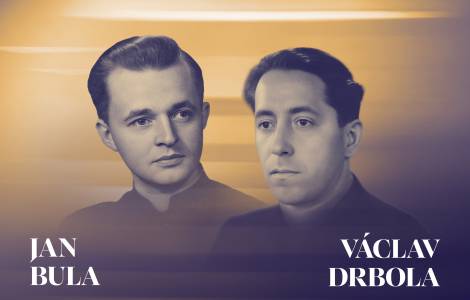
Brno (Fides News Agency) – “Regimes, ideologies, and fears pass away, but truth, love, and fidelity have a strength that survives history itself,” said Father Karel Orlita in an interview with Fides about the lives of Jan Bula and Václav Drbola, the two Czech priests who will be beatified in Brno on June 6. During the Eucharistic celebration presided over by Cardinal Michael Czerny, a chalice belonging to Jan Bula will be used.
Father Karel, postulator of the diocesan phase and administrator of the Roman phase of the beatification process, witnessed the progress of the beatification and canonization of the two martyrs firsthand: they are the first martyrs in the Diocese of Brno and in the contemporary history of the Czech Republic to be beatified or canonized.
“We live in a time marked by wars, polarization, cultural crises, fear, and moral confusion. In this context, their testimony remind us that humanity cannot live without truth and without hope. They show that it is possible to remain humanly free, even when everything seems dominated by violence and lies,” commented Father Karel.
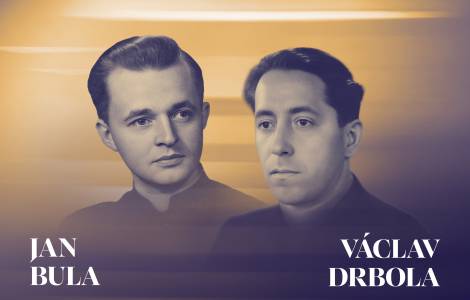
Václav Drbola was born in 1912 in Starovičky, South Moravia, into a family of modest means. After graduating from high school in 1933, he entered the diocesan seminary in Brno that same year. He was ordained a priest in 1938 and dedicated himself especially to children and young people, organizing catechism classes, theatrical performances, and sporting events. As a member of the Czechoslovak People's Party, he was actively involved in the public life of Bučovice, where he carried out much of his pastoral ministry, earning the affection of everyone through his gentleness.
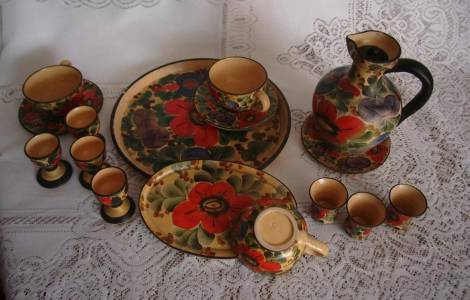
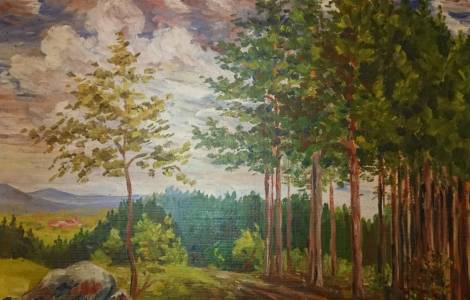
Jan Bula was born in 1920 in Lukow, a Moravian village on the border with Germany, into a very humble family. Like Drbola, he entered the seminary in Brno in 1939 immediately after graduating from high school. During the Second World War, he worked as a forced laborer in a ceramics factory under the German occupation, where his artistic talent was put to good use decorating everyday objects. In 1944, he returned to the bombed-out city of Brno, painted scenes from the Passion on cardboard, and devoted himself to studying and writing about Russian iconography. After the war, he was ordained a priest and sent to Rokytnice, where his generosity earned him the respect of all the parishioners. His brief ministry there was marked by excursions, theatrical performances for children and young people, renovations to the parish church, his involvement in community life as a member of the People's Party, and the paintings he created in his free time.
Following the communist coup of 1948, the Catholic Church, already suffering persecution under the Nazis, entered a new and difficult period. The nationalization of church property, the closure of schools and seminaries, and numerous arrests of clergy and laity led to an intensified, systematic campaign against the Church. In June 1949, the government implemented a plan to recruit Catholics for a newly established organization, the so-called Catholic Action. After banning the Catholic press and placing bishops under house arrest, the government attempted to convince clergy and the people that this was the new Catholic association they should join.
At the request of the Archbishop of Prague, Josef Beran, all priests, including Bula and Drbola, read aloud the circular letter he had issued during Mass on Sunday, June 19. In it, the faithful were called upon to be vigilant and loyal to the Roman Catholic Church. On this occasion, Bula also clarified that the signature bearing his name, which appeared among the members of the government initiative "Catholic Action," was a forgery: "(...) Be faithful. Do not disappoint the trust of the Church into which you were born. (...) Pray that the Holy Spirit may enlighten your minds and grant you true understanding in these difficult times."
This brought them to the attention of the STB (Czechoslovak State Security Service), which deployed an undercover investigator, "Captain Malý," to arrest the two priests. In February 1951, Bula's former classmate, Ladislav Malý, visited him and told him about a plan to free Archbishop Beran from prison. Malý added that Beran had expressed a wish to confess to a Catholic priest who remained loyal to Rome. Bula agreed to hear the archbishop's confession, and the captain visited the priest several times, but the priest refused to answer his questions about the meeting with the bishop.
Bula was arrested in April of that same year. The same pattern repeated itself with Drbola: Malý told him the same story about the archbishop, and the priest promised to hear his confession, but the time for confession never came. Drbola was arrested in June 1951. He was accused of instigating the assassination of Babice on July 2, 1951, in which the Captain and three other Communist Party officials were killed.
Drbola and Bula, both in prison at the time, were forced, under torture, to incriminate themselves and to repeatedly recite a script to be recited before the judge.
According to this statement, Drbola was one of the main instigators of the triple murder, and Bula was the leader of a subversive group that supported the Captain.
Drbola was executed on August 3, 1951, and Bula on May 20, 1952, in Jihlava Prison in West Moravia. Their reputation for innocence had already spread to the public at the time of their arrest. Two days after the trial, in which Drbola and 13 other Catholics (including another priest) were accused, Vatican Radio reported on the verdict, stating: “We do not know the true reason for the death sentences of the priests and laypeople. We will not learn it from official reports either. (...) If they were condemned for defending natural and inalienable human rights, then they are true martyrs.”
“While working on the Positio,” Father Karel said, “I often had the impression that the real main theme of their story was not so much the persecution, but the power of God’s grace that sustained them to the end.”
In a society increasingly characterized by emotional and psychological fragility, which particularly affects young people, “the example of life and the circumstances of the deaths of the two martyrs can contribute to the maturation of a healthy and free Christian conscience that does not submit to false (political or cultural) ideologies that were influential and manipulative then as now,” Maria Cristina Bresciani, postulator of the Roman phase of the beatification process, remarked in an interview with Fides.
The letters Bula wrote to his family from prison, which were withheld by the police and only later released, testify to the inner peace with which the young man endured the months of his imprisonment: “The Lord God granted me a short life, but I believe it was not in vain. Today I am happy to have served Him and to have remained His servant until the end. I go in peace with Him. I look forward to resting in eternity and seeing all those who have gone before me. (...) I had many plans, but they were all subordinate to God’s will.”
“The figure of Václav Drbola,” observes Father Orlito, “is also deeply moving. The testimonies show that he was a priest who was very close to the people, humble, fatherly, and simple. And perhaps it is precisely this ordinariness that makes his testimony all the more significant. These were not men striving for heroism: they were priests who simply wanted to remain faithful to Christ and the Church.”
“Two figures of great importance to society as a whole,” emphasizes Father Karel. “For believers, they are an example of fidelity to Christ and the Church, even in times of trial. They teach us that faith is not merely a cultural tradition or a private feeling, but a reality worth living for and, if necessary, suffering for. Yet their message also speaks to non-believers, for their sacrifice touches upon universal values: moral courage, the defense of conscience, and the rejection of the lies of power. Even those who do not belong to the Christian faith can recognize in them men who do not sacrifice their dignity.” (Fides News Agency, 30/5/2026)
janbula.cz
janbula.cz



 ASIA/SOUTH KOREA - Official hymn for Seoul WYD 2027 unveiled: "Take courage; I have overcome the world"
 "Christianity is only just beginning": How Leo XIV's missionary vision is rooted in the Acts of the Apostles
 US House bill calls to halt aid to Nigeria over anti-Christian violence
 ANGELUS - Leo XIV: May Vietnamese Blessed Truong Buu Diep intercede for "all those who proclaim the Gospel in situations of persecution"
 ASIA/LEBANON - The beatification of Patriarch Hoyek in Lebanon's new time of trial
 VIETNAM - Vietnam’s 'gratitude' for Father Truong Buu Diep's beatification
 “The Lord is my Shepherd”: Cardinal John Tong’s autobiography, a sign of gratitude for a journey of joy and hope
 A true priest, a true doctor: a documentary-film on the testimony of Romanian Venerable Martin Benedict