
Information service of the Pontifical Mission Societies since 1927
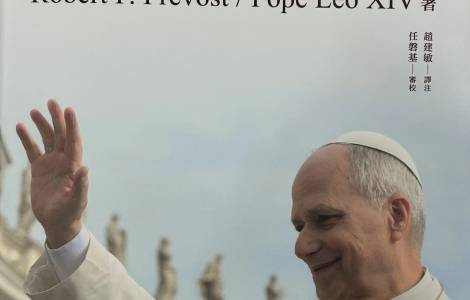
Beijing (Fides News Agency) – “The Office and Authority of the Local Prior in the Order of Saint Augustine”, the doctoral thesis of Pope Leo XIV, has been translated and published in Chinese.
The thesis on canon law, written by Robert Francis Prevost when he was a young Augustinian priest, was defended at the Pontifical University of Saint Thomas Aquinas (Angelicum) in 1987. It examines the role, authority and responsibilities of the local prior in the Order of Saint Augustine.
The Chinese edition was published by the Centre for Catholic Studies of the Chinese University of Hong Kong.
The translation was done by Father Peter Zhao Jianmin, a priest of the Diocese of Beijing with extensive academic experience.
Father Peter Zhao was the first Chinese priest to obtain a doctorate after the “reopening” and founded the Beijing Institute for Catholic Studies and Culture. Inaugurated on August 3, 2002, the institute is dedicated to academic research and aims to provide a platform for mutual learning between civilizations and cultural exchange through scholarly engagement.
The revision of the text was entrusted to Father Peter Ren Panji, the first Chinese priest to earn a doctorate from the Faculty of Canon Law at the Pontifical Gregorian University. He is currently involved in the formation of seminarians at the Beijing Seminary.
According to Father Peter Zhao, in a statement to Fides, “This classic work is not merely an academic study, but also a practical guide for Church governance and pastoral ministry. Although it was written almost forty years ago, it retains considerable depth and offers valuable guidance. This is the first Chinese translation of the work, and we hope that, whether clergy, religious or Church leaders, everyone will be able to draw wisdom from it and reflect anew on how authority can be placed at the service of love.”
The work also examines, from a theological perspective, the nature of ecclesial authority: authority is not a form of coercive power, but a service and a form of guidance recognized by the Church and the community. As Robert Francis Prevost emphasized, authority is relational in nature and must be exercised within a relationship of fraternity and equality.
From this perspective, readers may glimpse an ideal of contemporary Church leadership marked by humility and oriented towards fostering communion – an ideal that Pope Leo XIV embodies today.
(NZ) (Fides New Agency, 28/8/2026)



 In Malawi, a whole stadium celebrates 100 years of World Mission Sunday: “United in Christ, united in mission”
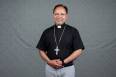 ASIA/INDIA - From south India's coastal plains to the Himalayan foothills: the missionary path of Bishop Edward Baretto of Darjeeling
 Pope Leo XIV: Let us celebrate the 100th anniversary of World Mission Sunday with gratitude and generosity
 POPE IN FRANCE/XI - Leo XIV in Metz: Europe seeks peace in the "Lantern of the Good Lord"
 Urbaniana University hosts study day of the “Velasio de Paolis Chair” on Law in the life and mission of the Ecclesial Community
 ASIA/MACAO - The Council of Nicaea at the Center of the 14th Forum for Young Chinese Scholars in Catholic Studies
 ASIA/CHINA - The 600th Anniversary of Leuven Catholic University celebrated in Beijing