
Information service of the Pontifical Mission Societies since 1927
AICU
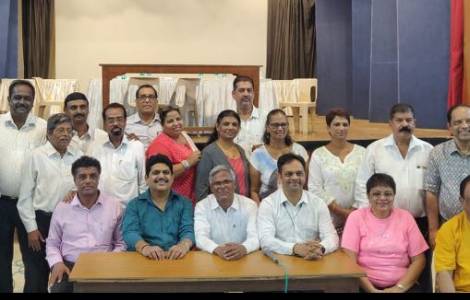
Goa (Agenzia Fides) – "At the beginning of 2026, the All India Catholic Union (AICU), which has served as the voice of the country's Christian citizens for 106 years, is calling for action: Together, through unity, education, and respect for principles, we can help create an India where diversity reigns and the rights of every citizen are protected from hatred and discrimination," declared AICU National Chairman Elias Vaz. Founded in 1919, the AICU is the largest representative body of Catholic lay people in India, with 120 diocesan units across the country.
The Christian community in India, particularly in states like Uttar Pradesh, Chhattisgarh, Madhya Pradesh, and Odisha, faced a difficult year in 2025, according to the AICU, marked by “high levels of violence and intimidation,” which peaked during the Christmas season. In a New Year’s appeal sent to Fides, the AICU proposes developing a comprehensive agreement for all Christian communities in India that includes “programs to educate citizens about the rights provided for in Articles 25-28 of the Indian Constitution.” These articles govern the life, rights, and freedoms of religious communities in the country. “Educating people about their constitutional rights and responsibilities can help faith communities respond effectively to the challenges they face daily,” explains John Dayal, spokesperson for the AICU. Furthermore, he notes that, with upcoming elections in mind, it is “necessary to consider measures that can prevent manipulation of voter registration lists to the detriment of religious minorities.” On a social level, given the planned census in India, it is essential to ensure that the census does not exacerbate divisions based on caste, ethnicity, religion, or culture.
One of the difficulties concerns interference in the activities of Christian schools, “such as those regarding holidays or curricula,” while another form of pressure, according to John Dayal, “is exerted through the restrictions of the Foreign Contribution Regulation Act (FCRA), which limits Christian organizations working in the fields of education and social services.” “These organizations suffer delays or cancellations of their licenses, which impairs, hinders, or sometimes even eliminates their ability to operate,” he affirms. “Christians,” Dayal states, “make up approximately 2.3% of India’s population and contribute significantly in education and healthcare. They are simply demanding equal rights for all citizens.” “It is clear that urgent changes are needed in the new year,” he says, recalling that “the violence and hatred that Christians in India faced throughout 2025 are damaging the pluralistic fabric of Indian society.” “This issue demands honest acknowledgment, political will, and collective action from the grassroots, from all Christian denominations and communities in the country,” he emphasizes. Dayal thanks Prime Minister Narendra Modi and Indian Vice President Radhakrishnan for visiting Christian institutions and churches during the 2025 Christmas holidays; but, he concludes, “mere declarations of principle are not enough: We call on the government to address the underlying issues that fuel the violence and discrimination.” (PA) (Agenzia Fides, 10/1/2025)



 ASIA/PHILIPPINES - The Silsilah movement: the spirit of Advent helps to break free from the “culture of corruption”
 ASIA/PHILIPPINES - Cardinal David: "Political dynasties are a cancer for the country"
 ASIA/HONG KONG - Celebration of the 105th anniversary of the founding of the “Legion of Mary”
 ASIA/INDIA - Anti-conversion laws: Catholics promote protection of freedom of conscience based on the constitution