Rome (Fides News Agency) - We publish the text of the video message of Pope Leo XIV to the international conference "The face of the universal Church in China. 100 years since the consecration of the first Chinese Bishops" (Pontifical Urbaniana University, November 5, 2026).
§§§
Dear brothers and sisters,
I am pleased to address all of you, participants in the conference entitled “The Universal Face of the Church in China.” It is dedicated to the story of the first Chinese Catholic bishops consecrated in modern times, who received episcopal ordination in St. Peter’s Basilica at the hands of Pope Pius XI one hundred years ago, on October 28, 1926.
Their consecration was an event of great significance, not only for the journey of the Catholic Church in China but also for the universal Church, as the title of your conference suggests.
They had set sail from Shanghai to receive episcopal ordination from the Successor of Peter, and we might summarize the sentiments that inspired them on that journey with the words of St. John of Avila: “If you send me, Lord, to do what you have done, give me your heart” (Sermon 57, 20).
In their journey, we see a metaphor for the long path traveled by the Catholic Church in China up to that day, the fruit of the great missionary zeal characteristic of the 1920s.
In 1919, in the Apostolic Letter Maximum illud, Pope Benedict XV reaffirmed the clear principle that the Church’s missionary work cannot be confused with processes of colonization or the export of ideas or cultural models. The seed of the Gospel, in fact, is meant to grow wherever it is sown—not through human strategies, but by the grace of God. And the Church, which is born of mission and the first proclamation of the Gospel, is happy to take on the characteristics and nuances of the people and nations among whom she is called to bear witness to Christ in charity.
In 1924, at the Council of Shanghai—the first General Council of the Church in China—the urgent need arose to entrust the leadership of communities and ecclesiastical districts to native Chinese priests and bishops as soon as possible. The missionary bishops themselves—all from other countries—had championed this request under the far-sighted guidance of the Apostolic Delegate, Archbishop Celso Costantini. It was necessary to initiate and foster that process in order to remain faithful to the very nature of the Church, whose unity is not uniformity but communion in diversity (cf. Francis, General Audience, September 25, 2013, 3).
Within the People of God, shared faith embraces differences, taking on—whenever possible—the characteristics of individuals and peoples with a broad perspective that mirrors God’s way of acting, as He calls each person with their own unique qualities. Thus, the Church lives among the peoples with friendship and sympathy for their hopes and noble aspirations. The Church Fathers already bore witness to this, noting with joy that faith in Jesus and the work of the Holy Spirit make people from different—and sometimes distant—cultures, languages, civilizations, and nations brothers and sisters.
In this regard, recently, referring to the great missionary bishop Saint Toribio de Mogrovejo, I had the opportunity to emphasize that no shepherd in the Church can claim the mission for himself alone, but receives and carries it out in communion, united with the Successor of Peter and with all the other Successors of the Apostles: the bishops scattered throughout the world (cf. Letter to the Bishops of Latin America and the Caribbean on the Occasion of the Third Centenary of the Canonization of Saint Toribio of Mogrovejo, September 8, 2026).
In this light, it is moving to think of our six future bishops, who traveled from Shanghai all the way to Rome to receive episcopal ordination at the tomb of the Apostle Peter. They crossed the globe to bear witness to the communion that blossoms from the faith of the Apostles, whose indispensable sign is the unity of every single bishop with the Bishop of Rome.
It is a beautiful, gratuitous, and comforting sign; a liberating bond; a closeness that instills confidence; and above all, a manifestation of the mystery of the Mystical Body of Christ, which, as Saint Paul VI wrote in the Credo of the People of God, “has no other life than that of grace.” Herein lies the uniqueness of the Church compared to all other social and political systems and organizations that shape and regulate societies and the coexistence of peoples.
Pope Benedict XVI, in his Letter to Chinese Catholics (May 27, 2007), wrote that “the Catholic Church in China, by a special grace of the Holy Spirit, has never been deprived of the ministry of legitimate shepherds who have preserved the apostolic succession intact” (no. 8).
His words were followed by those of Pope Francis: “Chinese Catholics, in communion with the Bishop of Rome, walk through the present time. In the context in which they live, they bear witness to their faith through works of mercy and charity, and through their witness they make a real contribution to social harmony and to the building up of our common home” (Video Message to Participants in the International Conference “100 Years Since the Concilium Sinense: Between History and the Present”, May 21, 2024, 3).
Thus, as often happens in the long history of the Church, looking to the past can shed light on the present. One hundred years ago, the journey of six men—who traveled from China to Rome to become bishops of the Catholic Church—kindled joy and pride in so many of their compatriots, consigning mistrust, suspicion, and hostility to oblivion. Today, in a world torn apart by conflicts and overwhelmed by wars, the Bride of Christ continues that same mission, praying that, in the face of every threat, the Lord may preserve the treasure of ecclesial communion, a fruitful source of goodness and peace for all.
Dearest friends, I wish you success in your work and I cordially bless you.




 From a French pioneer of the American frontier to Pope Leo XIV: Sister Lyn Osiek's long missionary journey
 100th WORLD MISSION SUNDAY - Pope Leo XIV: May the Church always remain faithful to the mandate of the Risen Lord
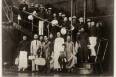 100 YEARS SINCE THE ORDINATIONS OF THE FIRST SIX CHINESE BISHOPS - The Role and Significance of the First Six Dioceses Entrusted to Chinese Bishops
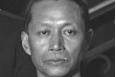 100 YEARS SINCE THE ORDINATIONS OF THE FIRST SIX CHINESE BISHOPS - Bishop Simone Zhu Kaimin and the Diocese of Haimen
 Leo XIV to the John Paul I Vatican Foundation Conference: peace is a daily Mission
 In Malawi, a whole stadium celebrates 100 years of World Mission Sunday: “United in Christ, united in mission”
 Archbishop Nwachukwu presents the “Church of the Sheaves”, an initiative born out of gratitude