
Information service of the Pontifical Mission Societies since 1927
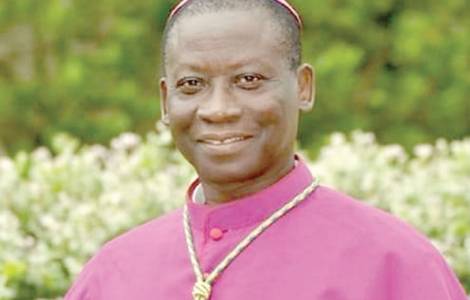
Accra (Agenzia Fides) – “Environmental destruction is a silent form of violence against the weak and a sin against creation,” said Bishop Matthew Gyamfi of Sunyani, President of the Ghana Catholic Bishops’ Conference (GCBC), at the opening of the Plenary Assembly of Ghanaian bishops on the theme “A Synodal Church at the Service of Justice and Peace in Ghana” yesterday, November 10, in Damongo.
Bishop Gyamfi referred primarily to the phenomenon of illegal gold mining (“galamsey”), which causes enormous damage to the environment and society. “This destruction is not just ecological: it is a moral and social tragedy,” emphasized the president of the GCBC, recalling that illegal gold mining has polluted over 60 percent of Ghana’s rivers with mercury and other toxic substances used in gold extraction and destroyed thousands of hectares of forest.
In the last five years, Ghana has lost $11.4 billion to illegal gold smuggling. With 39% of young people unemployed, many turn to this risky mining activity to survive.
The Bishops’ Conference of Ghana has long been one of the most important voices denouncing the environmental damage and human cost of illegal gold mining (see Fides, 16/11/2022 and 8/5/2024).
Bishop Gyamfi also expressed concern about the ongoing ethnic conflicts, particularly in Bawku (see Fides, 13/4/2022), Doba-Kandiga, Yendi, and Bimbilla, which have claimed numerous lives and displaced thousands. “Without justice, there can be no peace, and without compassion, there can be no lasting security,” he emphasized.
The President of the GCBC highlighted the Bishops’ Conference’s efforts to address these conflicts through the Sahel Peace Initiative (SPI). “The GCBC continues to work with the National Peace Council and the National Center for Early Warning and Response Mechanisms to develop a real-time conflict mapping system for timely intervention and preventative measures,” he added.
At the same time, Bishop Gyamfi noted that Ghana’s reputation as a beacon of democracy in West Africa is threatened by moral challenges such as inequality, corruption, environmental degradation, and recurring conflicts. He particularly emphasized that the 2024 general elections were marked by increasing political tensions and violence, and warned: “Democracy without conscience is fragile: Without truth and justice, it risks becoming a ritual rather than a renewal.” The GCBC president stressed that the Church in Ghana, in collaboration with the electoral commission and civil society organizations, contributed to the proper conduct of the elections with over 500 qualified observers deployed in 174 polling stations across 95 constituencies and 14 regions. (L.M.) (Agenzia Fides, 11/11/2025)



 The Course in Nemi: an open laboratory on the Bishops’ “missionary mandate”
 The Centenary of the consecration of Six Chinese Bishops and the Provisional Agreement between the Holy See and the People’s Republic of China
 ASIA/SOUTH KOREA - Second International Preparatory Conference for “WYD Seoul 2027” underway
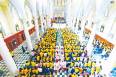 ASIA/HONG KONG - Celebration of the 105th anniversary of the founding of the “Legion of Mary”
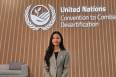 ASIA/MONGOLIA - COP17: The gift of faith in Jesus and care for creation in the witness of a young Mongolian woman
 AMERICA/PERU - Apostolic Vicariate of Iquitos issues urgent appeal to curb spread of illegal mining in the Amazon
 ASIA/PHILIPPINES - Catholic teacher killed: local church community demands truth and justice
 AFRICA/KENYA - “Pay small tea farmers more,” pleads Father Ambrose, parish priest in the western Rift Valley