
Information service of the Pontifical Mission Societies since 1927
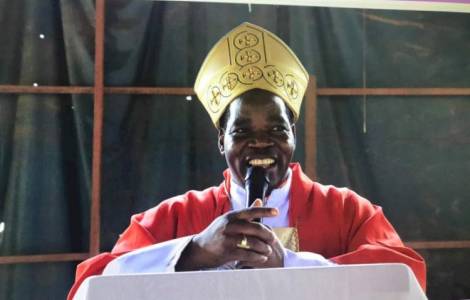
Juba (Agenzia Fides) – "The recent wave of violence in Juba is a national cry of protest," explains Bishop Barani Eduardo Hiiboro Kussala of Tombura-Yambio in his message entitled "Healing our wounded sons and daughters."
"What is happening is not just a crime. It is a cry. It is a symptom. A sign that something profound and dangerous is unfolding in the soul of the nation," explains Bishop Hiiboro in his message, which was sent to Fides.
The bishop is referring to recent events in the capital of South Sudan, in particular the rape of a 16-year-old girl by a gang of drug-addicted youths. The video of the sexual assault was subsequently posted online. It was later revealed that the victim belonged to a rival gang and that the rape and the video were an act of revenge.
The video caused a stir, prompting authorities to intervene and arrest approximately 600 youths from various criminal gangs in Juba, half of whom were released shortly afterward without charge.
According to the Bishop of Tombura-Yambio, the phenomenon of youth gangs affects all of South Sudan, not just the capital: "We must be honest: Juba is just the tip of the iceberg. From Nzara to Malakal, from Wau to Torit, from Yambio to Renk, from Bor to Yei, gangs, violence, addiction, and trauma are spreading silently." "We are sitting on a time bomb of youthful anger and disintegrating families, ready to explode while the nation remains silent," he warns.
"How can we stop all this?" asks Bishop Hiiboro. "With compassion. With courage. With deep and patient love," the bishop replies, criticizing the violent response of the security forces. "Weapons cannot heal trauma. Prisons cannot restore meaning in life," he affirms.
The South Sudanese bishop cites an example where a purely police and military response to the spread of youth gangs has exacerbated rather than diminished the phenomenon: "El Salvador tried military repression (Operation Iron Fist). The gangs grew." In other situations, however, a different approach has enabled the reintegration of young people, such as in Kenya, where "the Mathare Social Justice Centre uses former gang members as mentors in the slums," or in Colombia, where the authorities "offered education, employment, and dignity to the gang leaders, so they became peacemakers."
Based on these examples, Bishop Hiiboro proposes the creation of safe zones throughout the country where educational centers for young people are established, involving churches and mosques in addition to the young people's families. Furthermore, the justice system and the police must be reformed. Finally, the Bishop of Tombura-Yambio hopes for a national solidarity campaign in favor of the "lost youth." (L.M.) (Agenzia Fides, 5/9/2025)



 US House bill calls to halt aid to Nigeria over anti-Christian violence
 AFRICA/SOUTH AFRICA - Catholic bishops denounce the increase in violence against migrants
 ASIA/SOUTH KOREA - Second International Preparatory Conference for “WYD Seoul 2027” underway
 EUROPE/ROMANIA - Pontifical Society of the Holy Childhood: Jesus’ “torch” at the heart of missionary summer Camps
 The Course in Nemi: an open laboratory on the Bishops’ “missionary mandate”
 The Centenary of the consecration of Six Chinese Bishops and the Provisional Agreement between the Holy See and the People’s Republic of China