Information service of the Pontifical Mission Societies since 1927
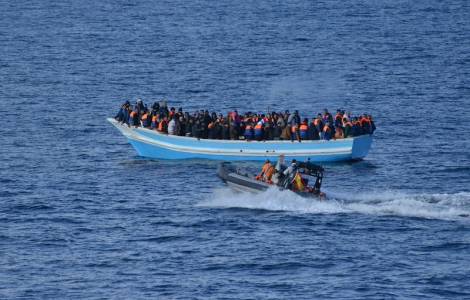
Santa Cruz de Tenerife (Fides News Agency) – The upcoming visit of the Holy Father to the Canary Islands on June 11 and 12 focuses on the migratory reality in the Atlantic, one of the most dangerous and deadly routes in the world, bringing thousands of people to the Canary Islands after crossings marked by suffering and the hope of a better future. According to the latest data, around 24,000 people reached the Canary Islands in 2024, while more than 19,000 have lost their lives on this route since 2020.
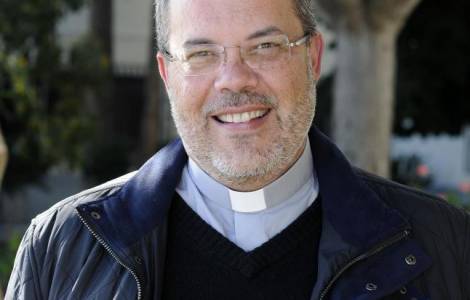
Fides interviewed Juan Pedro Rivero González, episcopal delegate of the Diocesan Caritas of Tenerife, professor of theology and church history, and parish priest in the Diocese of Santa Cruz de Tenerife, who says that the reality of migration “profoundly tests the collective conscience” and compels us not to become accustomed to suffering or to reduce the human drama to numbers or political debates. Through Caritas and parish communities, he emphasizes, the Church is trying to respond with closeness, acceptance, and the protection of human dignity in a country that has historically also experienced emigration.
The reality of migration is particularly evident on the islands, and with over 19,000 deaths since 2020, the Atlantic route is among the deadliest in the world. What challenges does this situation present?
The migration we are witnessing in the Canary Islands represents one of the greatest human and moral challenges of our time. Behind every statistic lies a face, a story, a family, and in many cases, immense suffering marked by poverty, violence, hopelessness, and despair. The Atlantic route has become a frontier of pain and death that profoundly challenges our collective conscience. From a human perspective, the greatest challenge is not to become accustomed to suffering. There is a danger of normalizing tragedies, of reducing arrivals and shipwrecks to mere footnotes. But no human being should be considered illegal or reduced to a statistical problem. We are talking about people with dignity who are seeking a better future. And from a spiritual perspective, this reality presents us as believers with a profound challenge. The Gospel constantly reminds us that Christ himself is present in the stranger, the poor, and the vulnerable.
Could you give us a general overview of the historical and current migration situation in Tenerife?
Historically, the Canary Islands have been a country of emigration and, for decades, also a country of reception. Our collective memory is shaped by generations of Canarians who had to emigrate in search of better opportunities in America or elsewhere. This historical experience should help us today to approach migration with greater sensitivity and humanity.
Who are the people you most often encounter when receiving migrants?
Currently, people of very diverse origins are arriving on our islands. These include families from Latin America, especially from Venezuela, Cuba, and Colombia; young people from sub-Saharan African countries; people from the Sahel region; Moroccan families; unaccompanied minors; and migrants fleeing armed conflict or extreme danger. They have often endured particularly harrowing journeys, resulting in significant physical and psychological trauma.
How does the local church experience and shape this reception, and what kind of support is offered, including spiritual guidance?
The local church aims to offer closeness and comprehensive support. We often encounter people of Muslim or other faiths, which requires deep respect and a willingness to engage in dialogue. The church does not primarily inquire about the religious affiliation of those affected, but rather about their needs and their dignity. Silent but invaluable work is being carried out by parishes, religious orders, the diocesan Caritas office, and numerous volunteers. The staff of church institutions who are addressing this situation will have the opportunity to meet Pope Leo XIV in the Plaza del Cristo in La Laguna.
What have you personally learned through your contact with migrants in your work with the church?
There are other priests who have more direct contact with migrants from Africa. However, we all maintain a relationship with migrants from Latin America who have enriched our Christian communities. Above all, contact with migrants has taught me the value of hope and human dignity, even amidst suffering. Many of these people arrive after extremely difficult experiences and, despite everything, maintain great resilience, gratitude, and confidence for the future.
What can the Christian community learn from migrants?
The Christian community can learn much from them: resilience, a willingness to sacrifice, the value of family, and in many cases, even a simple and profound faith. The poor and migrants are not merely recipients of aid; they also proclaim the Gospel through their witness. The reality of migration cannot be grasped solely through emergencies or border controls. Pope Francis has repeatedly emphasized the importance of addressing the root causes that force millions of people to flee their homes: poverty, violence, exploitation of resources, war, or a lack of prospects. In this sense, he also spoke of the “right not to emigrate,” that is, the right of every person to live in dignity, security, and hope in their own country without being forced to emigrate. True aid means not only welcoming people but also contributing to creating the conditions so that no one has to risk their life at sea to find a better future. In this spirit, the "El Buen Samaritano" Foundation of the Añaza parish in Santa Cruz de Tenerife has begun construction of a hotel in Senegal to provide local employment for young people without future prospects. I consider this project a paradigm shift in the fight against emigration.
You are not only the episcopal delegate for Caritas, but also a lecturer and priest, and therefore possess a comprehensive understanding of social realities. In your view, what contribution can the Church make to the social and political debate on migration?
The Church can offer a profoundly human and ethical perspective. It is not the Church's role to provide concrete technical or political solutions, but rather to constantly emphasize the central importance of human dignity and the necessity of building a society based on fraternity, not rejection.
What role should public institutions and civil society play? Is there sufficient cooperation? Sometimes public debate becomes excessively polarized, and there is a risk that the phenomenon of migration is exploited for ideological or electoral purposes. The Church is called to remind everyone that behind every political measure are real people. No institution can confront such a complex reality alone. Therefore, cooperation between governments, social organizations, religious communities, and citizens is essential. In the Canary Islands, there are many positive examples of cooperation, although there is always room for improvement. It is important never to lose sight of the individual.
What is the mood in the local Church and in society in general regarding the upcoming visit of Pope Leo XIV to the islands?
The Holy Father's visit is being received with great enthusiasm and hope, both in the local Church and in large parts of Canarian society. Beyond the institutional or media aspect, many people understand this visit as a sign of closeness and recognition of the reality in which we live on the islands.
How are parishes and communities preparing for the Pope's arrival?
Many parishes and communities are fostering moments of prayer, reflection, and preparation, especially in light of the reality of migration and the Pope's constant call for universal fraternity. I believe this anticipation helps to strengthen the Church's communion and renew our commitment to evangelization. The Pope possesses the remarkable gift of raising questions, stirring consciences, and drawing many people who may have been distant from the Church closer to it. Personally, I believe the most beautiful moment of the Holy Father's visit will be afterward, when we have the opportunity to read his speeches in peace and reflect on how the power of the Gospel renews our mission as Church.
The Pope will meet with migrants: What is the significance of this gesture?
The Pope is bringing back into focus those who often live on the social and existential margins. This is not merely a formal gesture; it is a sign to the world that migrants are not invisible and that their suffering cannot leave us indifferent. Furthermore, this encounter is deeply connected to the core of the Gospel. Jesus always turned to those rejected or marginalized by society. The Pope follows this logic, restoring a human face to a reality often analyzed solely through political or economic categories. For the migrants themselves, this gesture also signifies recognition of their dignity and worth as human beings.
From a more pastoral perspective, what are the biggest challenges for evangelization today, and how is the missionary dimension of the Church lived out in everyday life on the islands?
In a society characterized by secularization, individualism, and often religious indifference, it is no longer enough to simply maintain structures; it is essential to facilitate genuine encounters with people and create spaces where they can experience closeness, meaning, and hope. The missionary dimension of the Church in the Canary Islands is often evident in everyday life and in simple things: open parishes, support for families, care for the needy, educational projects, charitable work, and a presence in various social sectors.
Are there initiatives that represent a sign of hope for evangelization?
There are many hopeful initiatives that may not always receive media attention but quietly transform lives: projects with young people, support for families, assistance for migrants, communities that pray and serve together, social engagement, and evangelization experiences in contexts far removed from the Church. I believe one of the most encouraging signs is the realization of how many people—priests, religious, and lay people—continue to dedicate their lives to serving others with joy and generosity. There, the missionary heart of the Church continues to beat strongly. As long as there is a community ready to welcome those who suffer, to listen to them, and to stand by them, there will be hope; and the Canary Islands, by virtue of their history and their very soul, are called to be a land of encounter, of humanity, and of shared hope. (LGR) (Fides News Agency, 29/5/2026)