
Information service of the Pontifical Mission Societies since 1927
by Andrew Doan Thanh Phong
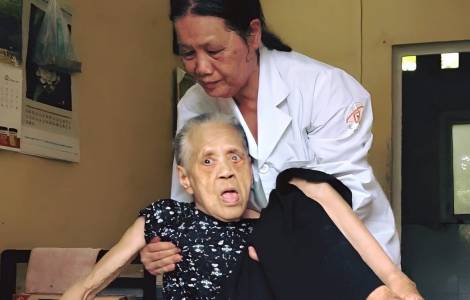
Thái Bình (Agenzia Fides) – 38 is the number of leprosy cases detected in 2025 in Vietnam marking the lowest annual number of cases ever recorded, The number of cases has decreased sharply over the past years. Between 2012 and 2016, over 1,000 cases were detected nationwide. In the last five years, only a few dozen cases have been detected annually. Currently, all provinces and cities have been recognized as leprosy-free zone, with only sporadic cases occurring.
According to Vietnamese health experts, this sharp decline is due to effective treatment protocols and timely management of leprosy cases in the community. But there are still approximately 6,000 leprosy patients nationwide at present, mostly those who have had the disease previously and have recovered from the bacterial infection, but still badly suffer from residual effects.
Most patients are cared for by Catholic nuns from Orders such as the Lovers of the Cross, Missionary Franciscans,... at over 10 facilities across the country which are known as "leper colonies". The nuns do not only treat the leprosy patients but also care for the elderly and orphaned children affected by the disease.
Most leper colonies in Vietnam were established from the early 20th century (like Quy Hoa in Qui Nhon city central Vietnam in 1929) to the 1960s and 1970s (like Bien Hoa in South Vietnam in 1968) in remote, and isolated areas due to fears of spreading the disease to the community, so they lack basic amenities and face poor living conditions, both physically and mentally. Leprosy does not only torment patients physically but also leave profound psychological scars on them. Besides feeling self-conscious about their appearance, they are also ostracized and shunned wherever they go. Some elderly people who contracted the disease at a young age and have lived in leper colonies for 50-60 years because they have no home to return to.
Mrs. Lo Thi Coc who was already cured of leprosy, but now she still has poor eyesight, and she feels much pain in her legs from the deformities, especially when the weather changes. She never forgets the horrific experiences of fear, and of discrimination from her neighbors that she faced in the past. She confided: “Back then, my family and I were really struggling, we were very poor, and no one wanted to be close to us for the fear of being infected. At that time I was thinking about running away into the forest to live out the rest of my life, but thanks to the unwavering support and companionship of my son, I changed my mind.”
Understanding their immense suffering, the sisters devoted themselves to caring for the patients in the leper colonies which helped many of them rediscover joy in life. “I have no family here, but the Catholic nuns and various organizations help me, so life is a little easier”: confided by Mr. Joseph That, 78 years old - patient at the Ben San leper colony in Long Binh hamlet, Binh Duong province in South Vietnam. He was married, but his wife left him after discovering the leprosy and has never contacted him since then. Now his legs had to be amputated, and he wears prosthetics, his hands are contracted as a result of leprosy, and he walks with a limp, a truly pitiful sight.
A patient at the Quy Hoa leper colony run by sisters from the Order of Missionary Franciscans in Quy Nhon, central Vietnam, shared: “The sisters fight for our rights, so we all respect them and consider them like family members” Another patient, who has been at the leprosy village since 1960, whose father was a member of the Communist Party and whose siblings are Buddhist, shared that he converted to Catholicism because the sisters cared for him like his mother. Following the example of the sisters, he has stayed at the colony to do hair cut for the elderly patients, visiting them, and comforting them.
Many examples of dedicated service by Catholic nuns at leper colonies have been appreciated by community and praised in state-run newspapers, especially Sister Nurse Anna Nguyen Thi Xuan, born in 1957 with nearly 40 years caring for patients at the Qua Cam leper colony, in the Bac Ninh diocese of northern Vietnam. She was awarded the Third Class Labor Medal by the President of Vietnam and is one of 50 individuals who received a commendation from the Prime Minister for her achievements in the field of social welfare.
Meaningful activities demonstrating the care and communion of the entire Vietnamese Catholic Church towards lepers, such as visits and gift-giving, are regularly carried out by Catholic communities everywhere. Most recently, during the Lunar New Year of Horse, on 5th Feburary the Diocese of Thai Binh organized a gathering and New Year celebration with leprosy patients at Dong Tho Chapel, Thai Sa Parish. Through this, Bishop Dominic Dang Van Cau – the Bishop of the Diocese – called on the faithful to welcome, love, and accompany those suffering from leprosy. He emphasized: “This is not only an act of mercy, but also a concrete way to live the mystery of communion in the Church. Currently, the Diocese of Thai Binh is building a new facility – a home for those suffering from leprosy and hopefully it creates a stable, safe, and lovely living space, and provides the patients with a long-term refuge”. (Agenzia Fides, 6/3/2026)



 VATICAN - Sister Mary Teresa Barron appointed adjunct secretary of the Dicastery for Evangelization and president of the Pontifical Mission Societies
 ASIA/CHINA — During spiritual retreats, Chinese priests and religious sisters offer prayer and fasting for the sick and study the Encyclical “Magnifica humanitas”
 ASIA/INDONESIA - The Church honors a German nun who spent her life among lepers
 ASIA/INDIA - Care of leprosy patients: work of the Church on a mission
 POPE IN FRANCE/V - The (silent) mission of Lourdes: “God’s charity does not heal those who have no wounds”
 At the Course for Newly Appointed Bishops, practical tools for missionary communion with the Successor of Peter were presented
 New episcopal ordination in China: Ignatius Ding Zuyao ordained Bishop of Haimen
 CHINA/VATICAN - From “exceptional event” to a common practice: Chinese bishops take part in Holy See initiatives
 ASIA/PAKISTAN - Pakistan's first palliative care center for terminally ill patients opens in a Catholic hospital
 Hope can rise again amid the rubble: The mission of Catholic Schools in the peripheries of Latin America
 AFRICA/SOUTH AFRICA - Catholic bishops denounce the increase in violence against migrants