
Information service of the Pontifical Mission Societies since 1927
Eu .Echo - Creative Commons
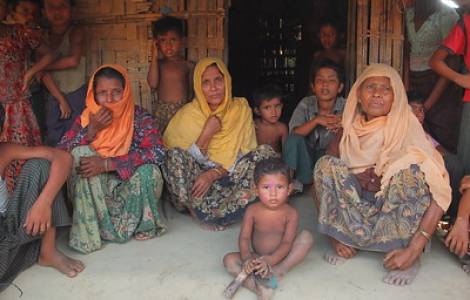
Pyay (Agenzia Fides) – “The fighting continues, and innocent people are still suffering in the Burmese state of Rakhine,” says Peter Tin Wai, Bishop of Pyay, an important city in Rakhine (or Arakan) State, where he leads a diocese that covers nearly the entire territory of the state in western Myanmar.
Among the latest violent incidents, an airstrike carried out by the Burmese army on September 12 sparked pain and outrage. The strike targeted two private schools in the town of Kyauktaw, killing 20 young people between the ages of 15 and 21.
The Burmese regular army is fighting against the Arakan Army (AA), an ethnic armed group that has taken control of most of Rakhine and now holds 14 out of 17 municipalities. The Burmese military, having lost ground, is resorting to aerial bombings that also hit civilian buildings and homes. UNICEF, expressing “deep concern,” stated that the September 12 attack “adds to an increasingly devastating pattern of violence in Rakhine State, with children and families paying the highest price.”
Intense fighting continues along the eastern border of Rakhine State, a front line where the ethnic formation has pushed back the junta’s military forces. Bishop Tin Wai explains to Fides: “In most of the state, power is in the hands of the Arakan Army. In those areas, communication is cut off, the education system is in crisis, and people are just trying to survive.”
“We have 12 parishes that continue their mission in that territory: the priests stay close to the people, they are struggling, trying to get by with daily life and sustain themselves materially; they also strive to celebrate the sacraments and keep the churches open amid the suffering,” he says.
Of the approximately 30,000 faithful in the diocese, about half live in areas controlled by the AA. The other half, he continues, “is in the three municipalities of Sittwe, Kyaukpyu, and Munaung, which are still under army control.”
“The situation on the ground,” he states, “continues to cause displacement. Refugees come to Pyay or leave the state for Yangon, seeking safety. There is a shortage of rice in Rakhine, and many lack education and health care. Families try to move to areas where essential services like schools still function,” he reports.
In this time marked by violence, “innocent civilians are caught between two warring armies. Both forces have imposed conscription, forcing young people to enlist and fight. That’s why all our youth are fleeing abroad, and society is losing its best energy.”
On the pastoral and spiritual front, the Bishop notes: “With their simple lives and limited means, priests and religious try to stay close to the people, comforting the afflicted. Faith is alive despite the war. In fact, one could say that in times of hardship and suffering, people turn to God with even greater intensity and fervor.”
“While armed groups are everywhere,” he observes, “we don’t know what the future holds. Every day is a gift from God. In this civil war that is devastating the nation, national dialogue is urgently needed and until this happens, no one will win and all will be losers. We pray for peace and ask everyone to join us. In a time of anguish, the Church preaches peace and hope and implores God to end this tribulation.” (PA) (Agenzia Fides, 19/9/2025)



 AFRICA/SOUTH SUDAN - Body responsible for monitoring the peace agreements: "There is a risk of a large-scale resumption of civil war"
 ASIA/INDIA - Archbishop Neli: "We need to consider whether closing the border between Manipur and Myanmar will have peaceful effects"