
Information service of the Pontifical Mission Societies since 1927
UNICEF Xinhua picture alliance
by Cosimo Graziani
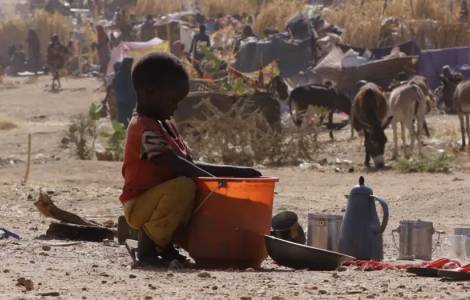
El Fasher (Agenzia Fides) – In the tragedy of the conflict in Sudan, the Darfur region is one of the hardest hit. In particular, in North Darfur state, the siege of the capital, El Fasher, by the Rapid Support Forces (RSF) has brought the population of the city and the Zamzam refugee camp on the outskirts to their knees for months. The siege is blocking the arrival of food and raising prices, which are now the highest in the country. The population is exhausted; throughout the city and in the refugee camp, the number of malnourished people is increasing day by day, and the only means at their disposal is to cook food normally intended for cows.
The animal feed is called ambaz and is the residue from the processing of sunflower seeds, peanuts, and sesame. Food waste, which for years was used as a supplement to livestock feed because it was rich in protein and inexpensive, is now the only food available to a population exhausted by the conflict and siege.
Like any substitute food, ambaz is not only incomplete but even harmful. The problem lies in its lack of vitamins and other nutrients, as well as the fact that it develops a carcinogenic toxin if improperly stored. The harms posed by this forced choice include malnutrition, liver damage, and in some cases even cancer. These problems are exacerbated by the fact that ambaz is mainly consumed by children.
As the newspaper "Dabanga" reports, it is primarily widows with children who use this type of remedy to combat food shortages by cooking it like porridge. Since in some cases it is the only food for all meals, all the children who consume it suffer the consequences.
According to sources in the government of North Darfur, whose capital is Al Fasher, the cause of the humanitarian crisis is middlemen and traders who deliberately block food supplies to drive up prices. The governor announced the creation of an ad hoc commission to monitor the markets and uncover those involved in this mechanism. The governor himself has attempted to force the release of the blocked food stocks by threatening to confiscate them and distribute them free of charge to the population.
At the same time, the state governor has appealed to humanitarian organizations to intervene in the region, where prices for the few available supplies have become extremely high. The World Food Programme suspended food deliveries in February due to the deteriorating security situation. In previous months, in addition to direct food deliveries, food vouchers were also distributed to families, but only 60,000 vouchers were issued last month.
Although the town of El Fasher has been besieged by the RSF for a year, it is the last town in the state still controlled by government troops. In August of last year, famine was declared in the Zamzam refugee camp. Zamzam has been home to a total of 500,000 people since 2004, and it is not the only refugee camp that has sprung up around the capital of North Darfur. The refugee camp in Abu Shouk, on the outskirts of El Fasher, houses a total of around 450,000 people. Both camps have been targeted by the RSF. The most recent raid, in Abu Shouk less than a week ago, left 40 people dead.
Between April 11 and 14, Zamzam was the next target. Initially, it was estimated that around 400 people had died in this attack. A recent investigation by the English daily newspaper "The Guardian" has revised this figure: new estimates speak of at least 1,500 deaths. (Agenzia Fides, 18/8/2025)



 The BRICS between “global governance” challenges and the growing role of African countries
 Litoměřice: New commemorations for victims of anti-German massacres of 1945 during the “Jubilee of Reconciliation”
 AFRICA/SOMALIA - Food insecurity rises amid drought alarm and the specter of famine
 AFRICA - Catholic Migration Commission (ICMC): 34 million people threatened with famine
 ASIA/INDONESIA - Missionary October and the fight against malnutrition
 AFRICA/NIGERIA - Northeast Nigeria affected by food insecurity
 AFRICA/DR CONGO - Maniema province is also suffering the consequences of the war in neighboring North Kivu
 ASIA/IRAQ - Qaraqosh, tensions and disputes around the role of the "Babylonian Brigades"
 ASIA/INDIA - Rice production increases: "The problem of pesticides persists"
 AFRICA/SUDAN - Arms traffickers thrive while the population is in despair